Key Takeway:
There is no age at which low-dose radiotherapy for osteoarthritis suddenly becomes suitable. People in their 50s are routinely considered, and treatment can be appropriate in your 40s when the circumstances are right. Age matters because it affects the very small long-term radiation risk, but it sits alongside your pain, your diagnosis and what you have already tried.
If you have been offered low-dose radiotherapy for osteoarthritis, you may wonder whether you are too young to have it. The short answer is that there is no single age at which this treatment suddenly becomes suitable: people in their 50s, and sometimes younger, may reasonably be considered. Your age matters, but it is only one part of a careful discussion about your pain, your general health, what you have already tried and the small possible long-term risk from radiation.
There is no fixed age cut-off
It is understandable to expect a simple rule, such as “radiotherapy is only for people over 60”. In reality, there is no evidence that someone aged 59 is too young while the same person becomes suitable on their 60th birthday.
Research has included patients below 60, and some studies suggest that younger patients respond at least as well as older patients. One study of 196 people with osteoarthritis actually found better results in younger patients, with fewer courses of treatment needed.
German guidance, which is widely used because low-dose radiotherapy has been offered there for many years, advises particular caution in people under 40. Many specialists are also more cautious below 50, but this still leaves room to consider treatment for a patient in their 40s or 50s when the circumstances are right.
Why does age come into the discussion?
Age is mainly relevant because radiation has a very small possible risk of causing cancer many years later. A younger person has more years ahead in which that risk could appear, so a specialist should take extra care when recommending treatment.
This does not mean that low-dose radiotherapy is known to be dangerous in younger patients. The doses used for osteoarthritis are low, the radiation is carefully aimed at the painful joint, and the estimated long-term risk is very small.
It does mean that the likely benefit needs to be worthwhile. A 52-year-old whose knee pain limits work, walking and sleep despite other treatment may have a good reason to consider radiotherapy, while someone with mild symptoms may be better advised to continue with simpler measures.
Low-dose radiotherapy can reduce osteoarthritis pain
Low-dose radiotherapy has been used for many years to treat painful osteoarthritis, particularly in Germany and other parts of Europe. It is now attracting more interest in the UK and the United States as further research is published.
The treatment uses much less radiation than is normally used to treat cancer. Its purpose is to reduce inflammation and pain within the joint, which may make walking, movement and everyday activities easier.
Radiotherapy does not remove the arthritis or rebuild the worn joint. Around 75% of patients have a substantial improvement in pain, some notice a smaller improvement, and some do not benefit.
Studies have found worthwhile improvement in many patients
A recent American study looked at 69 patients who had 168 painful joints treated. By the end of treatment, 80% of the treated joints had improved, and 72% were still improved at follow-up.
A large study involving 970 patients also found that people across different older age groups had similar chances of responding. Although this study does not directly tell us what happens in every younger patient, it supports the view that the treatment does not depend on reaching a particular age.
There is also evidence involving younger adults. In a ten-year study of people with knee osteoarthritis, whose average age was around 37 to 40 at the beginning, those who received radiotherapy alongside their usual care were less likely to develop long-term disability.
More recently, a trial in patients aged 50 to 85 compared low-dose radiotherapy with a sham treatment. The patients who received radiotherapy had a greater improvement in knee pain and physical function.
The research is encouraging, although it does not show that the treatment works for everybody. An earlier study found no clear benefit over a sham treatment after three months, so there is still debate about which patients are most likely to respond. We look at the whole body of evidence in more detail in our review of whether low-dose radiotherapy really works for knee osteoarthritis.
What does treatment involve?
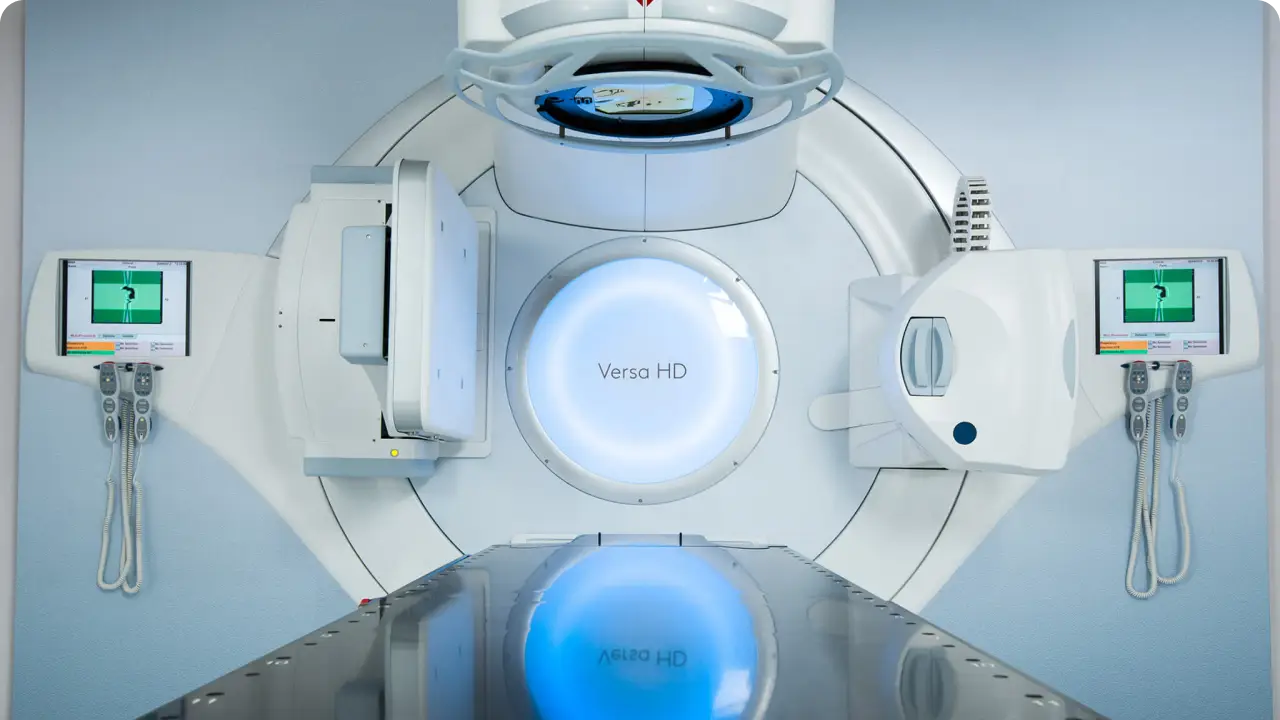
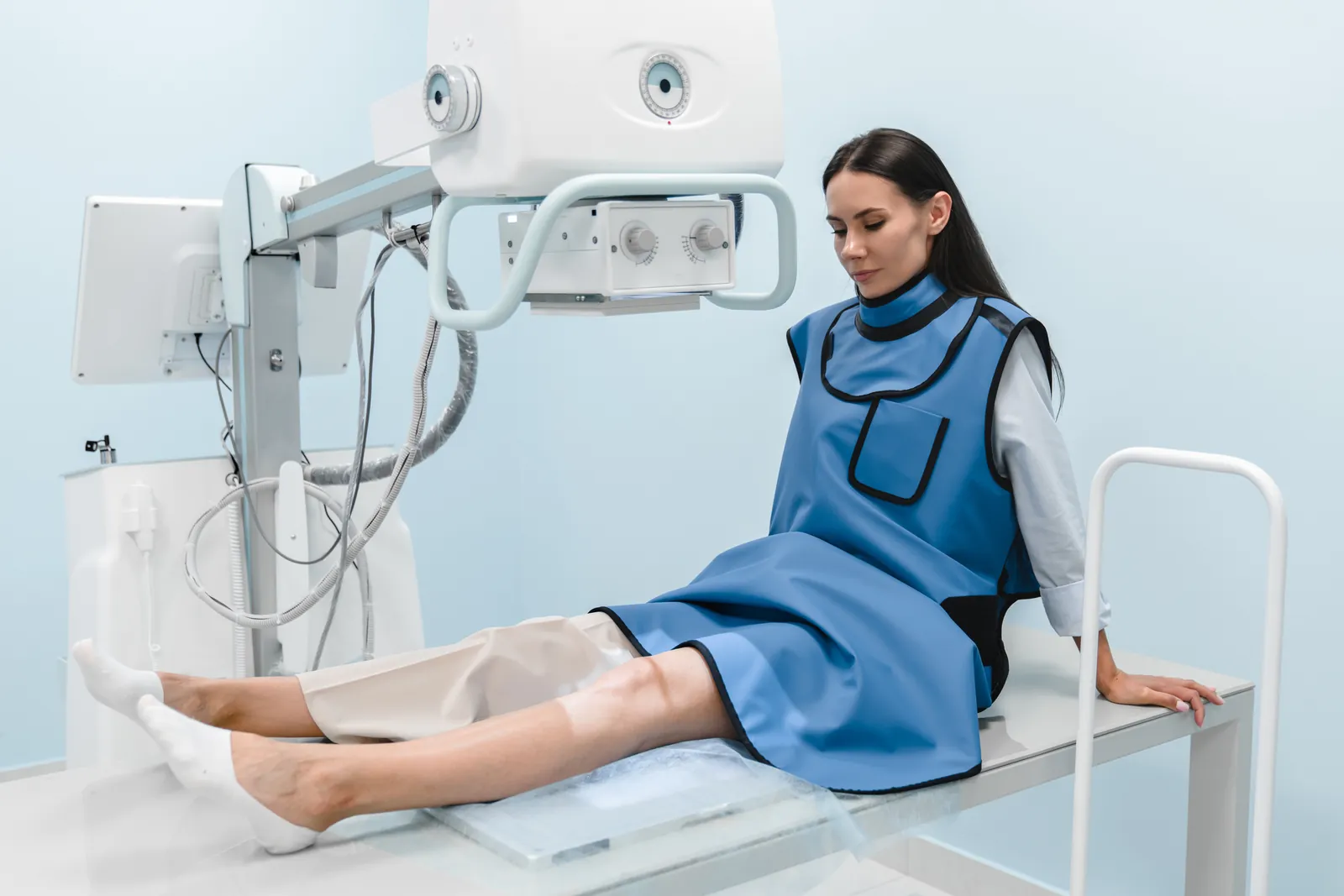
Treatment is given as a short series of outpatient appointments. A common course consists of six treatments spread over two or three weeks, with each visit usually taking only a short time.
You do not feel the radiation, and there is no injection or anaesthetic. You can go home immediately afterwards and carry on with your usual activities.
The radiation dose is a small fraction of the dose used for cancer treatment. The exact dose and the area treated are planned for you, with care taken to reduce radiation to the surrounding healthy tissues.
Wondering whether you're a suitable candidate?
Age is only one part of the picture. A specialist assessment with Dr Richard Shaffer can tell you whether osteoarthritis is the main cause of your pain and whether low-dose radiotherapy is worth considering in your case. Book a consultation today, or get in touch if you would like to ask a question first.
Who might be suitable under the age of 60?
Being under 60 does not automatically make you suitable, just as being over 60 does not mean that treatment will be recommended. The starting point is whether osteoarthritis is genuinely the main cause of your pain.
Many people have signs of osteoarthritis on an X-ray or MRI without those changes causing all of their symptoms. A specialist therefore needs to listen to the history, examine the joint and make sure that another problem is not a more likely explanation.
Radiotherapy is usually considered after sensible first treatments have not helped enough. These may include exercise or physiotherapy, changes to activity, weight loss where appropriate, painkillers or anti-inflammatory medicines, and sometimes a joint injection. These are also the first-line measures set out in NICE guidance on managing osteoarthritis.
You do not necessarily have to try every possible treatment first. What is reasonable will depend on your health, the joint involved and whether other options are safe or acceptable for you.
For example, some people cannot take anti-inflammatory medicines because of stomach, kidney or heart problems. Others have had little benefit from injections, or they may wish to delay a joint replacement because they are relatively young.
The stage of the osteoarthritis also matters. Low-dose radiotherapy may be more helpful before a joint has become severely damaged, while advanced arthritis causing major disability may be better treated with surgery.
What are the risks for a younger patient?
Most people have few immediate side effects from low-dose radiotherapy. Depending on the joint treated, there may be some mild skin redness, dryness or irritation, but serious short-term problems are unusual.
The main concern for a younger patient is the small possible risk of a cancer developing in or near the treated area many years later. This risk cannot be measured precisely for an individual, but it is expected to be very low (generally less than 1 in 1,000 for someone in their 40s, and mainly a type of skin cancer that does not spread) because the total dose is low and only a limited area is treated.
The position of the joint affects the discussion. Treating a knee, hand or foot is different from treating an area close to organs that are more sensitive to radiation, and your specialist will take this into account when planning treatment.
Any previous radiotherapy is also important. You should tell your specialist if you have ever had radiation treatment to the same part of the body or somewhere nearby, even if it was many years ago.
Radiotherapy does not rule out surgery later
Having low-dose radiotherapy does not usually prevent you from having a joint replacement or another operation later if it becomes necessary. This can make it a useful option for someone who wants to improve pain now but is not yet ready for surgery.
It is important to have realistic expectations. Radiotherapy may reduce pain for a useful period, but it cannot guarantee that you will avoid surgery forever or stop the osteoarthritis from progressing.
Your age should be part of the decision, rather than the whole decision
For someone under 60, the most useful question is: “Do the likely benefits for me outweigh the small long-term risk?” This is a more helpful way to think about treatment than searching for a particular age that makes it safe or unsafe.
A younger patient with persistent pain, clear osteoarthritis and few good alternatives may have a strong reason to proceed. Another patient of the same age with mild pain, an uncertain diagnosis or several simpler options available may be advised to wait.
Your own feelings about the choices matter as well. Some patients are comfortable accepting a very small possible radiation risk to reduce daily pain, while others would prefer to avoid radiation even if the chance of harm is low.
A specialist assessment can give you an individual answer
If you are in your 50s, your age alone should not prevent you from asking about low-dose radiotherapy. Patients in their 40s may also be considered, although the long-term risk deserves a careful discussion.
During an assessment, the specialist should explain how likely the treatment is to help, why you may or may not be a suitable patient, and what the possible risks mean in your case. You should also have the chance to compare radiotherapy with continuing your current treatment, trying another non-surgical option or considering surgery.
There is therefore no universal age cut-off that gives the right answer for every patient. The best decision comes from looking at your osteoarthritis, your symptoms, your previous treatment and your priorities together.
Frequently asked questions
Is there a minimum age for radiotherapy for osteoarthritis?
No. There is no fixed age cut-off. German guidance advises particular caution below 40, and many specialists are more cautious below 50, but patients in their 40s and 50s can be considered when the likely benefit is strong enough.
Can you have low-dose radiotherapy for arthritis in your 40s?
Yes, in some cases. It depends on how much your pain limits daily life, whether osteoarthritis is clearly the main cause, and what else you have already tried. The small long-term radiation risk deserves a fuller discussion at that age.
Does radiotherapy work less well in younger patients?
There is no evidence that it does. One study of 196 people found better results in younger patients, with fewer courses of treatment needed, and a large study of 970 patients found similar response rates across older age groups.
What is the long-term risk of radiotherapy for a younger patient?
The main concern is a very small possible risk of a cancer developing in or near the treated area many years later. For someone in their 40s, this is generally estimated at less than 1 in 1,000, and mainly a type of skin cancer that does not spread.
Can I still have a joint replacement after radiotherapy?
Yes. Having low-dose radiotherapy does not usually prevent you from having a joint replacement or another operation later if it becomes necessary.
How many radiotherapy sessions are needed for osteoarthritis?
A common course is six treatments spread over two or three weeks. Each visit is short, there is no injection or anaesthetic, and you can go home and carry on with your usual activities immediately afterwards.