
Many people assume that once knee replacement enters the conversation, surgery is only a matter of time. But that’s not always the case.
For some people, particularly when the joint is very severely damaged and other treatments have been exhausted, knee replacement can be highly effective and may be the best path forward. However, many patients fall into a much larger middle ground where there is significant pain and loss of function, but several non-surgical options remain worth considering.
It is also important to remember that non-surgical treatments do not become irrelevant just because surgery is being discussed. Exercise, weight management, pain control and other measures remain important throughout the entire osteoarthritis journey. Even if someone ultimately proceeds to a knee replacement, being fitter, stronger and healthier beforehand often improves both the operation and the recovery afterwards.
Being told you may need a knee replacement can still feel overwhelming. Although knee replacement is one of the most successful operations performed in the UK, it is still a major surgery.1 Recovery takes time, and while many people achieve excellent results, surgery does not get rid of pain or stiffness in every patient.
It is therefore reasonable to want to understand what alternatives are available before making a decision.
This article explains the main evidence-based alternatives that can be considered before knee replacement, what the evidence says about them, and how to have an informed conversation with your consultant.
Why Surgery Is Not Always The First Answer
For some people, knee replacement is clearly the right option. When the joint is badly damaged and symptoms remain severe despite appropriate treatment, surgery can provide substantial pain relief and improve quality of life.
However, many people still have treatment options available that may improve symptoms without an operation.
Even when someone eventually decides to proceed with a knee replacement, measures such as exercise, weight management and pain management are still important as they can improve symptoms beforehand and may contribute to a smoother recovery afterwards.
What Is The Usual Approach Before Knee Replacement?
Most specialists do not jump straight from a diagnosis of knee osteoarthritis to recommending a knee replacement.
Instead, the usual approach is to see how much you can improve with non-surgical treatments first. These may include exercise, weight management, pain relief, injections and other treatments aimed at reducing symptoms and improving day-to-day function.2
For some people, these can improve symptoms enough to postpone surgery for years. For others, they make it clear that a knee replacement really is the best next step.
Either way, exploring these options first often leads to a more informed and confident decision.
Alternatives To Knee Replacement
There are several treatment options that can help reduce pain and improve function before surgery becomes necessary. The right approach depends on the severity of the arthritis, your symptoms, your overall health and your personal goals.
Exercise And Physiotherapy
Exercise is one of the most effective treatments available for knee osteoarthritis and forms the foundation of treatment for almost everyone.3
It’s understandable to worry that exercising an arthritic knee might make things worse. In reality, exercise is one of the most effective treatments available. Stronger muscles help support the knee, improve stability and make everyday activities easier and more comfortable. Exercise can also improve confidence, fitness and overall function.
A physiotherapist can help design a programme suited to your symptoms and fitness level. For people who find weight-bearing exercise difficult, exercises performed in water can be a useful starting point because the water supports some of the body’s weight and reduces pressure on the knee.
Weight Management
For people who are overweight, weight loss can significantly reduce the forces passing through the knee during everyday activities.
Even a modest reduction in body weight can improve pain and mobility.4 Weight management is therefore considered a core part of treatment rather than a separate issue.
Pain Relief And Anti-Inflammatory Medication
Pain relief does not treat the underlying arthritis, but it can help people stay active and continue with exercise and other treatments.
Many people start with anti-inflammatory gels applied directly to the knee. These can be effective and generally cause fewer side effects than tablets.
Anti-inflammatory tablets can also be helpful, particularly during flare-ups. However, they are not ideal as a long-term solution because they can cause side effects when taken regularly over time.
Your GP can advise on which options are most suitable for you.
Steroid Injections
Steroid injections aim to reduce inflammation within the joint and can provide temporary pain relief.
Some people experience improvement for several weeks or months, while others notice less benefit. They are often used when symptoms have flared up or when pain is making exercise difficult.
Hyaluronic Acid Injections
Knee Bracing And Walking Aids
Simple measures are sometimes overlooked. An offloading brace may reduce pressure on the most affected part of the joint, while a walking stick can reduce load through the knee and improve confidence when walking. For the right person, these relatively straightforward interventions can make a meaningful difference.
Newer Treatments Worth Discussing
Platelet-Rich Plasma (PRP)
PRP uses a concentrated preparation of your own blood platelets, injected into the knee joint.
Some studies have reported improvements in pain and function, particularly in people with earlier-stage osteoarthritis, although results remain variable and the treatment is generally accessed privately.5
Low-Dose Radiotherapy
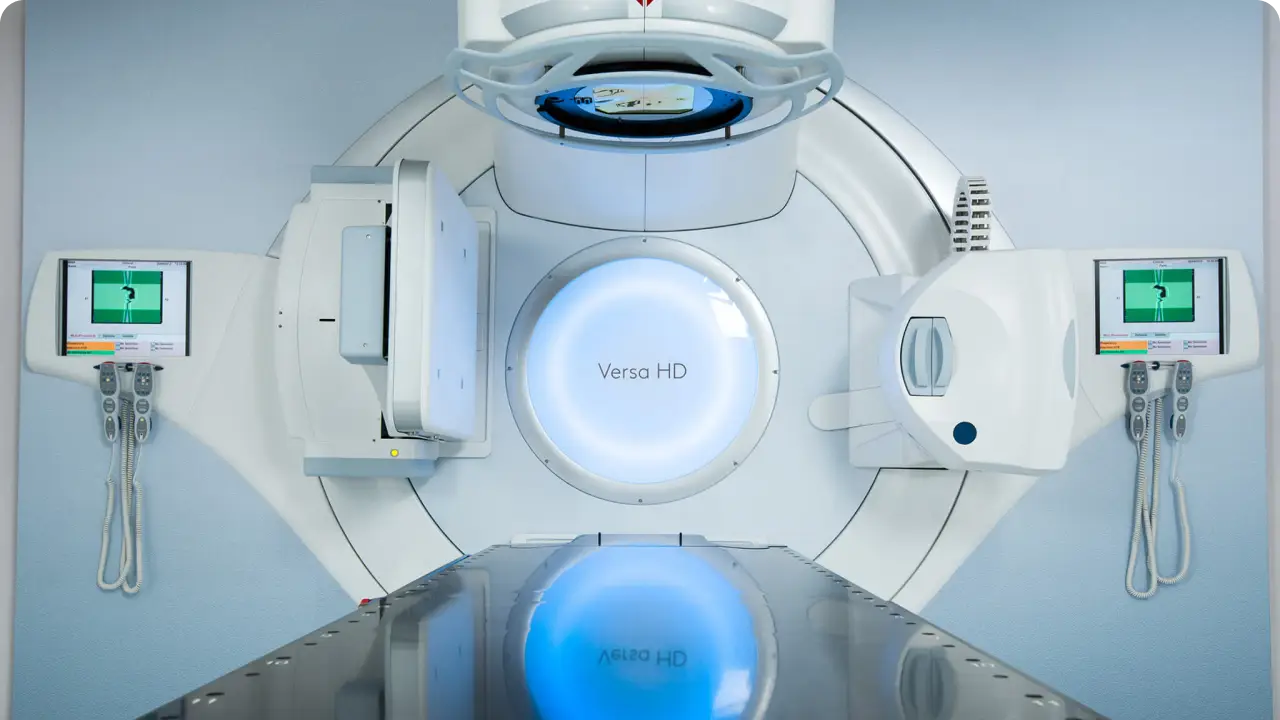
Low-dose radiotherapy uses very small doses of radiation to reduce inflammation and pain in the affected joint.
This is entirely different from the high-dose radiotherapy used to treat cancer. Treatment is delivered in six short outpatient sessions over two to three weeks and does not require injections, anaesthesia or recovery time. Most people continue their normal daily activities throughout.
Radiotherapy is not usually considered a replacement for knee replacement surgery in someone with end-stage arthritis and very severe joint damage. However, many patients reach a point where knee pain has a significant impact on daily life, but surgery either feels too early or is something they would prefer to postpone if possible.
That is where low-dose radiotherapy may have a role.
The goal is to make the knee easier to live with. For some people, that means being able to walk further, sleep better, rely less on pain medication or return to activities that have become difficult. For others, it may provide a way of delaying surgery while maintaining a good quality of life.
Several clinical studies have reported meaningful reductions in pain following treatment, with some patients maintaining benefit for months or years.6 While it does not help everyone, it is increasingly being considered as an option for people who remain troubled by symptoms despite exercise, physiotherapy, weight management and medication.
Low-dose radiotherapy is generally considered after simpler measures have been tried, but before someone commits to a knee replacement. It sits alongside injections and other specialist treatments as one of the options available between conservative treatment and surgery.
If you are interested in exploring whether low-dose radiotherapy might be suitable for your situation, an assessment by a specialist with experience in benign radiotherapy is important. Dr Richard Shaffer, a Consultant Radiotherapy Specialist, has treated more than 3,000 patients with low-dose radiotherapy for benign conditions and sees patients through Joint Pain Practice clinics across the UK.
Frequently Asked Questions
What Are The Alternatives To Knee Replacement Surgery?
The main non-surgical options include exercise and physiotherapy, weight management, pain relief medication, corticosteroid injections, hyaluronic acid injections, PRP therapy, knee bracing and low-dose radiotherapy. The most appropriate combination depends on the severity of the arthritis, your symptoms and your treatment goals.
Can Physiotherapy Help Me Avoid Knee Replacement?
For some people, yes.
Physiotherapy can reduce pain, improve strength and make everyday activities easier. While it may not be enough on its own for everyone, particularly when arthritis is very advanced, it is one of the most important treatments available and is recommended for almost all patients with knee osteoarthritis.
Even if surgery eventually becomes necessary, improving strength and movement beforehand can help with recovery afterwards.
Are Non-Surgical Treatments Available On The NHS?
Physiotherapy, pain relief medication and corticosteroid injections are commonly available through the NHS, although access varies between regions.
Some treatments, including PRP therapy, hyaluronic acid injections and low-dose radiotherapy for osteoarthritis, are usually accessed privately in the UK.
How Long Can I Delay Knee Replacement Surgery?
There is no single answer.
Some people manage well with non-surgical treatments for many years, while others find that surgery becomes necessary sooner because pain and loss of function continue to worsen.
The decision is usually based less on the X-ray and more on how much the knee is affecting your daily life.
Is Low-Dose Radiotherapy A Proven Alternative To Knee Replacement?
Low-dose radiotherapy has been used for painful joint conditions for many years and clinical studies have reported meaningful pain relief in many patients with knee osteoarthritis.6
It is generally considered after measures such as exercise, weight management and pain relief have been tried, but before someone commits to knee replacement surgery.
A specialist assessment can help determine whether it is likely to be appropriate in your particular situation.
What Questions Should I Ask Before Agreeing To A Knee Replacement?
Useful questions include:
- Which non-surgical treatments are still worth trying?
- How severe is the arthritis on my X-rays or scans?
- What are the realistic benefits and risks of surgery in my case?
- What would happen if I delayed surgery for six to twelve months to try other things first?
A good consultation should leave you feeling that you understand both the potential benefits of surgery and the alternatives available.
Still Unsure Whether A Knee Replacement Is The Right Next Step?
If you have been told that you may need a knee replacement but feel there may still be other options worth considering, a specialist assessment can help clarify where you are on the spectrum between conservative treatment and surgery.
For some people, a knee replacement may turn out to be the right next step. For others, treatments such as physiotherapy, injections or low-dose radiotherapy may still have a role to play.
Dr Richard Shaffer has treated more than 3,000 patients with low-dose radiotherapy for benign conditions and sees patients across the UK. If you would like to explore whether low-dose radiotherapy could be appropriate for your situation, view our locations and services or get in touch to arrange an assessment.
References
- Matharu GS, Culliford DJ, Blom AW, Judge A. Projections for primary hip and knee replacement surgery up to the year 2060: an analysis based on data from The National Joint Registry. Ann R Coll Surg Engl. 2022;104(6):443–448. PMID: 34939832.
- National Institute for Health and Care Excellence. Osteoarthritis in over 16s: diagnosis and management. NICE guideline NG226. 2022.
- Fransen M, McConnell S, Harmer AR, et al. Exercise for osteoarthritis of the knee. Cochrane Database Syst Rev. 2015;1:CD004376. PMID: 25569281.
- Messier SP, Mihalko SL, Legault C, et al. Effects of intensive diet and exercise on knee joint loads, inflammation, and clinical outcomes among overweight and obese adults with knee osteoarthritis. JAMA. 2013;310(12):1263–1273. PMID: 24065013.
- Jawanda H, Khan ZA, Warrier AA, et al. Platelet-Rich Plasma, Bone Marrow Aspirate Concentrate, and Hyaluronic Acid Injections Outperform Corticosteroids in Pain and Function Scores at a Minimum of 6 Months as Intra-Articular Injections for Knee Osteoarthritis: A Systematic Review and Network Meta-analysis. Arthroscopy. 2024;40(5):1623–1636.e1. PMID: 38331363.
- Micke O, Ugrak E, Bartmann S, et al. Radiotherapy for calcaneodynia, achillodynia, painful gonarthrosis, bursitis trochanterica, and painful shoulder syndrome: early and late results of a prospective clinical quality assessment. Radiat Oncol. 2018;13(1):71. PMID: 29673383.