
There’s a wide range of treatments for painful osteoarthritis, and surgery is not the only option. If you have just been diagnosed or have been managing the condition for a while, you probably want a clear understanding of the different treatments and where each one fits in the overall journey.
That is what this guide aims to provide. Osteoarthritis (OA) is the most common form of arthritis and affects around 8.5 million people in the UK. It can affect many joints, including the knee, hip, hand, wrist and thumb, foot and ankle, elbow, and shoulder. The most common symptoms are pain, stiffness, and loss of movement, although the severity varies considerably from person to person.
Some people manage well with simple measures for many years. Others reach a point where those treatments are no longer enough and begin looking for the next step. This guide walks through the main treatment options available in the UK today, from exercise and medication through to injections, radiotherapy, and surgery, explaining where each option may fit in your journey.
Conservative treatment for osteoarthritis: where most people start
The starting point is almost always non-medical. That means lifestyle changes, movement, and education before anything is prescribed or injected. The National Institute for Health and Care Excellence (NICE) and the Osteoarthritis Research Society International (OARSI) both place these at the core of any treatment plan.
For many people, these treatments provide meaningful relief and help maintain function for years before surgery becomes necessary. The key is finding the right combination of treatments at the right time, rather than relying on a single treatment alone.
Exercise and physical therapy
Exercise is one of the most effective treatments available for osteoarthritis pain and function. Strengthening the muscles around a joint helps support it better and can reduce the stress placed on the joint during everyday activities. A physiotherapist can build a programme around which joints are involved, what your imaging shows, and what you can realistically keep up with at home.
Hydrotherapy and supervised rehabilitation both have good supporting evidence, particularly for people who find weight-bearing exercise too painful to start with. Consistency tends to matter more than the specific type of exercise. Exercise is therefore considered a cornerstone of osteoarthritis treatment, often forming the foundation on which other treatments are added if needed.
Weight management
For weight-bearing joints such as the knees, hips and feet, extra body weight increases the load on already worn cartilage. Even a modest reduction in body weight can lead to a much larger reduction in the forces passing through the joint. Diet combined with exercise is generally more effective for weight loss than diet alone, and weight management often works best as part of a broader treatment plan.
Education and self-management
People who understand their condition tend to manage it better. The old idea that osteoarthritis is simply inevitable wear and tear that always gets worse is not accurate, and it can leave people feeling powerless. Education-based approaches focus on joint protection, pacing activity through the day, and setting realistic goals. Done well, they help people stay active, make informed decisions about treatment, and regain a sense of control over their condition.
Medications used in treatment for osteoarthritis
When exercise and lifestyle changes are not giving enough relief, medications come next. They do not change the underlying disease, but they can take the pain down enough to let you function and stay active.
The choice of medication depends on which joints are affected, what other health conditions you have, and how previous options have worked.
Topical and oral NSAIDs
Non-steroidal anti-inflammatory drugs (NSAIDs) are among the most commonly used medications for osteoarthritis. They reduce inflammation and block pain signals. Topical versions, applied directly over the affected joint, are now preferred for knee OA because they work locally with less gastrointestinal risk than tablets. NICE recommends offering a topical NSAID to people with knee osteoarthritis as the first pharmacological option, with oral NSAIDs reserved for when topical options are unsuitable or ineffective.
Oral NSAIDs carry real risks with long-term use, particularly for older adults. Stomach bleeding, kidney and liver damage and effects on the heart mean they should be used at the lowest effective dose for the shortest time possible. Many patients also need to take a medicine to protect the stomach along with them.
Paracetamol
Paracetamol is sometimes the first thing people reach for, but the evidence for its effectiveness in osteoarthritis is weaker than widely assumed. NICE no longer recommends paracetamol routinely for osteoarthritis, although some people say that it makes a difference for them, particularly where they can’t tolerate NSAIDs.
Duloxetine
Duloxetine is an antidepressant that also has pain-relieving effects. In some people with long-standing osteoarthritis, the nervous system becomes more sensitive to pain signals, so the pain experienced is greater than would be expected from the joint changes alone. Duloxetine may help by reducing this pain sensitivity.
Injections as part of the treatment for osteoarthritis
Injectable treatments sit between oral medicines and surgery on the pathway. They deliver the active agent directly into the joint, offering more targeted relief than tablets.
Here is a quick summary of the four main injectables used in UK practice. Each has a slightly different role and a different evidence base.
- Corticosteroid injections: the most widely available on the NHS. They reduce joint inflammation quickly, but the effect typically does not last longer than a couple of months.
- Hyaluronic acid (HA) injections: supplement the joint’s natural lubricating fluid. The evidence is mixed, and NICE does not routinely recommend them for osteoarthritis.
- Platelet-rich plasma (PRP): uses growth factors from your own blood to support healing. Early results are promising, but long-term evidence is still developing.
- Arthrosamid: a newer synthetic hydrogel injected into the knee. It becomes incorporated into the joint lining and may provide some cushioning of the joint.
Corticosteroid injections
Steroid injections are the most widely available injectable option on the NHS. They reduce inflammation inside the joint and can deliver relatively quick pain relief, which makes them useful during flare-ups. Cleveland Clinic notes that the pain relief from a steroid injection typically lasts six to eight weeks. They are not suited to repeated long-term use as frequent injections into the joint can actually make the arthritis more severe over time.
Hyaluronic acid injections
Hyaluronic acid (HA) injections aim to supplement the joint’s natural lubricating fluid. The goal is to improve lubrication within the joint and reduce symptoms. The evidence is mixed. Studies have not consistently shown that hyaluronic acid works better than a placebo injection, and NICE does not recommend it routinely. Privately, it is still widely offered.
Platelet-rich plasma (PRP)
PRP uses the patient’s own blood, which is processed so that it contains a higher concentration of platelets, which release growth factors that may help support tissue repair. The aim is to support healing within the joint. Some studies suggest PRP injections may help reduce knee osteoarthritis pain and improve function for several months. Results vary from one trial to the next, and long-term outcomes are not yet firmly established.
Arthrosamid
Arthrosamid is a synthetic hydrogel injected into the knee joint to provide cushioning. It is a newer option with some evidence of longer-lasting relief compared with steroids or hyaluronic acid. Private Arthrosamid injections typically cost from around £800 per treatment, with the exact figure varying by centre. It is not routinely available on the NHS.
Treatment for osteoarthritis when injections stop working
Finding treatment for osteoarthritis when injections stop working can feel like the end of the road. It rarely is. Plenty of people reach this stage feeling stuck, with injections that have worn off and surgery that seems like too big a step.
More specialised care fills this gap. Once the usual measures like physiotherapy, weight management and pain relief stop giving lasting comfort, low-dose radiotherapy for osteoarthritis is worth considering. It does not depend on having had injections first. Some people come to it after injections have faded. Others choose it before trying injections at all. The common thread is simple: gentler treatments are no longer giving enough relief, but surgery is either unwanted, too soon, or not suitable.
There are no non-surgical medicines that cure osteoarthritis or undo the joint damage behind it. Non-surgical care works by easing symptoms, not by reversing structural change. Most of that care sits under one heading: conservative treatment. It covers physiotherapy, weight management, pain relief and assistive supports such as braces, insoles and walking aids. For many people, this mix keeps things comfortable for years.
When conservative treatment no longer gives enough relief, the next step is more specialised. Low-dose radiotherapy is the main option at this point. Rather than masking pain the way a tablet does, it aims to calm the low-grade inflammation that keeps a worn joint sore.
Assistive devices and bracing
Knee braces can offload a specific compartment of the joint and reduce pain during walking and activity. Insoles and orthoses change foot mechanics and reduce the force transmitted up through the leg into the knee and hip. They tend to relieve pain when matched to the individual rather than handed out as a blanket solution. Like medication, they work best as part of a broader plan, not as standalone fixes.
Acupuncture
Acupuncture is recognised as a supported option for osteoarthritis pain in some clinical settings. It is generally considered an adjunct rather than a primary treatment. NICE no longer recommends acupuncture as part of routine NHS osteoarthritis care, but some private clinics still offer it.
Speak to a specialist about your osteoarthritis
Low-dose radiotherapy: a non-surgical option many UK patients have not heard of
Low-dose radiotherapy (LDRT) is one of the most established non-surgical options for osteoarthritis worldwide, but it is not yet widely used in the UK. It is not new. Germany has decades of clinical experience with it (they treat more than 50,000 patients per year), and it is embedded in the guidelines of the German Society of Radiation Therapy and Oncology (DEGRO).
LDRT uses very small doses of radiation, far lower than cancer treatment doses, to calm the inflammation driving osteoarthritis pain. The radiation does not cause any tissue damage at these levels. Published clinical reviews suggest LDRT provides symptomatic pain relief in the majority of patients with osteoarthritis, with very few acute side effects. DEGRO guidelines give LDRT for knee osteoarthritis a category B recommendation (“should be carried out”) based on level II to III evidence. The recommendation drops to category C (“can be carried out”) for hip, hand and shoulder osteoarthritis.
Low-dose radiotherapy is not a first-line treatment, but it is more flexible than many people expect. It can be tried at different stages of care rather than only at the end. It tends to work best once someone has given conservative treatment a fair go, usually at least three to six months of physiotherapy, weight management and pain relief. If that has not brought enough lasting comfort, radiotherapy becomes a sensible next step. It also helps people who have already moved on to medications and injections without the relief they hoped for. So whether someone is weighing it up after a few months of conservative care or after injections have worn off, the option is still open.
How LDRT works
Low-dose radiotherapy (LDRT) works by calming down inflammation within the joint. The doses used are much lower than those used for cancer treatment and are designed to reduce pain and stiffness. Because the treatment is directed only at the affected joint, it avoids many of the side effects associated with long-term anti-inflammatory medication.
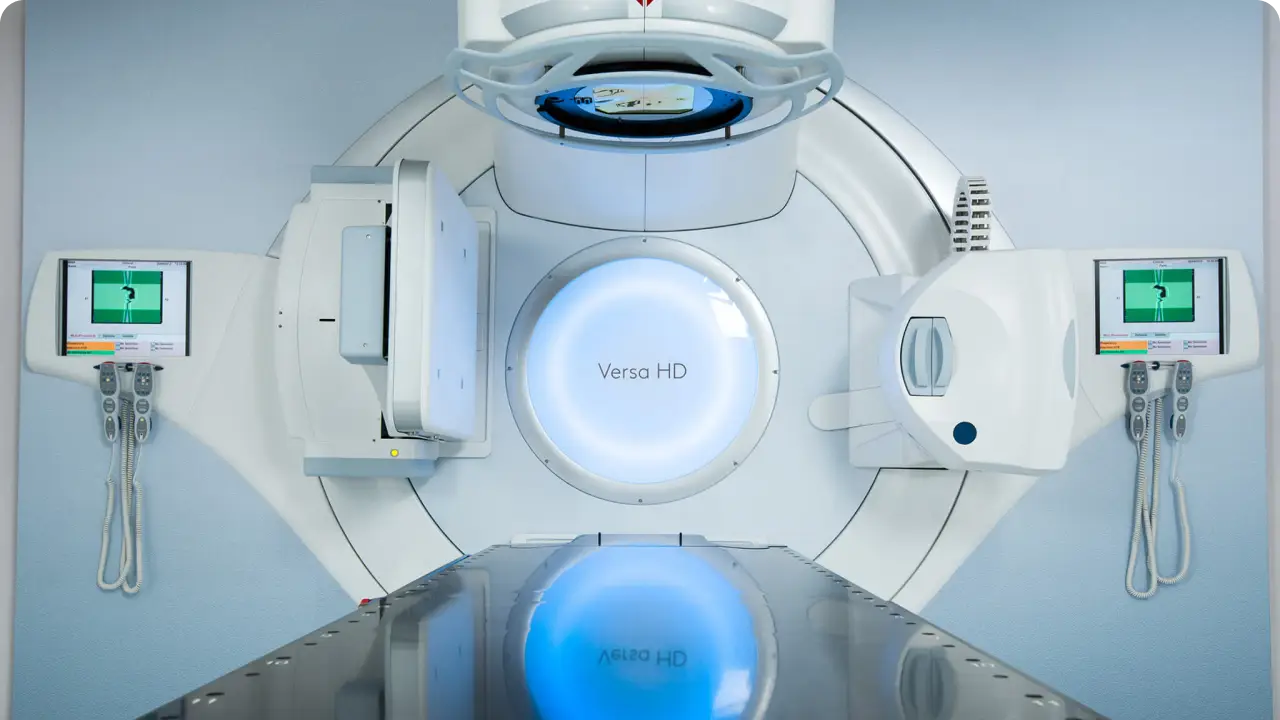
A typical course involves six sessions delivered three times a week over two weeks. The total dose sits well under established safety limits. For context, a full LDRT course for osteoarthritis uses roughly a twentieth of the radiation dose used in cancer treatment. For a fuller overview of the treatment, including who it suits and what to expect, see our guide to low-dose radiotherapy for osteoarthritis.
Which joints can LDRT help with?
LDRT has been studied across many different joints. The evidence base is strongest for the knee, with randomised controlled trials and long-term follow-up. There’s also good evidence showing the effectiveness of LDRT for hip, hand and wrist, foot and ankle, and elbow and shoulder osteoarthritis.
One practical advantage of LDRT is that it can be applied to several joints in the same person. Many people with osteoarthritis have more than one joint involved at a time. Unlike surgery, LDRT does not require a separate procedure for each joint, which really helps when you are managing widespread OA.
Joint Pain Practice, led by Dr Richard Shaffer (President of the International Organisation for Radiotherapy for Benign Conditions), offers low-dose radiotherapy across the full range of joints. That includes knee osteoarthritis, hip osteoarthritis, hand and wrist osteoarthritis, thumb joint osteoarthritis, foot and ankle osteoarthritis and elbow and shoulder osteoarthritis. Treatment is delivered through a network of 15 UK centres.
Surgery for osteoarthritis
Surgery is considered when other treatments have not provided enough relief, and the impact on quality of life is severe. It is not the automatic next step. Many people can delay or avoid it altogether with the right non-surgical management.
The two main surgical options are joint replacement and osteotomy.
Joint replacement surgery
Total joint replacement is the most established type of surgery for very severe osteoarthritis, particularly of the knee and hip. The damaged parts of the joint are removed and replaced with an artificial joint. For the right patients, the outcomes can be very good.
There are some important considerations to weigh up before surgery.
- Recovery takes several months and requires significant rehabilitation.
- Artificial joints typically last 15 to 20 years, and many patients younger than 70 may eventually need the joint replaced again. That matters particularly for younger or more active patients.
- Anaesthesia carries risks, particularly for older adults with existing health conditions.
- Around 20% of patients still experience pain or stiffness after replacement, or find that function improves less than expected.
These factors are why many patients in their 50s and early 60s are encouraged to consider non-surgical options before surgery. Clinicians often recommend delaying surgery where it is reasonable to do so.
Osteotomy
When the damage is limited to one part of the joint, an osteotomy can change the position of the bones to take pressure away from the damaged area. This is more commonly done in younger patients with knee OA affecting one compartment of the knee. It is not appropriate for widespread joint damage.
When standard treatment for osteoarthritis stops working
A practical UK point is that many people with severe osteoarthritis face a long wait before joint replacement surgery. For that reason, it’s often worth exploring non-surgical options early. Often, patients get enough benefit to delay surgery, maintaining good function and quality of life for longer before they need a joint replacement.
In the clinic, the patients who tend to benefit most from LDRT have moderate osteoarthritis on X-rays rather than the most advanced, end-stage disease. Most have already tried one or more standard treatments without sufficient relief. The severity of pain is less important than the degree of structural damage seen in the joint, and even patients with very severe symptoms may benefit. These are often patients who are not yet at the stage of joint replacement, or who would prefer to delay surgery if possible. To find out whether that profile fits you, see who benefits most from radiotherapy treatment for osteoarthritis.
Treatment for osteoarthritis: frequently asked questions
What osteoarthritis treatments are available in the UK?
Conservative care comes first: exercise, physiotherapy, weight management and joint protection. If that has not given enough relief after three to six months, there are several directions to go, and they do not have to happen in a strict order. Medications are one, including topical and oral anti-inflammatories, with duloxetine suited to some people. Injections are another, such as corticosteroid, hyaluronic acid, PRP and Arthrosamid. Low-dose radiotherapy is a further option once conservative care has been given a fair go. It can be considered before someone tries injections or after injections have worn off, so it does not sit in one fixed slot. Joint replacement or osteotomy are kept for end-stage disease, when the joint is too far gone for gentler measures.
What is the best treatment for osteoarthritis?
There is no single best treatment for osteoarthritis. The right approach depends on which joint is affected, how severe the condition is, what you have already tried, and your overall health. For most people, the best results come from combining exercise, weight management, topical anti-inflammatories, and one of the more specialist options where standard care has not been enough.
What are the treatments for osteoarthritis of the knee?
Treatment for knee osteoarthritis follows the same general pathway as osteoarthritis care overall. Exercise and physiotherapy come first, alongside topical anti-inflammatories. If that has not given enough relief after a few months, several options open up, and they do not have to happen in a set order. Steroid injections and hyaluronic acid are commonly offered in secondary care. Low-dose radiotherapy for knee osteoarthritis is a non-surgical option that can be considered once conservative care has been given a fair go, whether that is before injections or after they have worn off. Total knee replacement is kept for severe end-stage disease.
Can osteoarthritis be treated without surgery?
Yes, many people manage osteoarthritis without surgery for years, sometimes indefinitely. A well-structured combination of exercise, medication, joint protection and targeted therapies can provide significant relief. Low-dose radiotherapy adds an option to that toolkit, particularly for people whose pain has not responded to standard treatment. To understand why patients choose this route, see why radiotherapy is used for osteoarthritis.
How long do steroid injections last for osteoarthritis?
For most people, the relief lasts a few weeks to a couple of months, with limited evidence of benefit beyond three months. They are useful as a short-term measure during a flare-up. They are not designed for repeated long-term use. Frequent injections into the same joint can speed up joint damage.
Is low-dose radiotherapy for osteoarthritis safe?
Low-dose radiotherapy uses doses far below those used for cancer treatment. Most patients experience no side effects, although mild dryness or irritation of the skin can occasionally occur. A possible long-term concern is a very small increase in the risk of developing skin cancer in the treated area many years later. Current estimates suggest this risk is extremely low, likely less than 1 in 1,000 for most patients. Overall, low-dose radiotherapy has been used for decades and is generally considered a very safe treatment.
Will my osteoarthritis get better with treatment?
Osteoarthritis cannot be reversed, but the symptoms can absolutely be improved. Many people see meaningful reductions in pain and improvements in function with the right combination of exercise, weight management, medication and (where needed) more specialist treatments like low-dose radiotherapy. The aim is to keep pain manageable, maintain function, and slow progression.