What Is Arthritis? A Clear Guide to Osteoarthritis, Its Causes, and What It Means for Your Joints
A lot of people want a plain answer to one thing: what is arthritis, and what does it mean for their joints? It is an umbrella term that covers more than 100 different joint conditions. Osteoarthritis is the most common form by a long way. If your GP has just used the word with you, or you keep waking up with stiff joints, the first thing on your mind is usually whether it will get worse. The honest answer is that it depends on which type, which joint, and what you do next.
Osteoarthritis is common. In fact, around 8.75 million people in the UK have sought treatment for osteoarthritis, making it a leading cause of long-term pain and reduced movement in adults over 50. It develops when the cartilage that helps joints move smoothly gradually becomes thinner, and the whole joint begins to change. Early pain is thought to be caused mainly by inflammation and irritation of the tissues around the joint, rather than by the cartilage itself. Over time, these changes can lead to increasing pain, stiffness and reduced movement. This guide explains how osteoarthritis develops, what increases the risk, and what treatments may help.
What is arthritis, and how it differs from osteoarthritis
The word arthritis comes from the Greek words for “joint” and “inflammation”. Over time it became a label for almost any condition that causes joint pain, stiffness or swelling. When people ask what is arthritis, they usually have one of two conditions in mind: osteoarthritis or rheumatoid arthritis. The two can look alike from the outside. Underneath, they are very different problems with very different causes.
Osteoarthritis vs rheumatoid arthritis: what is arthritis like in each form
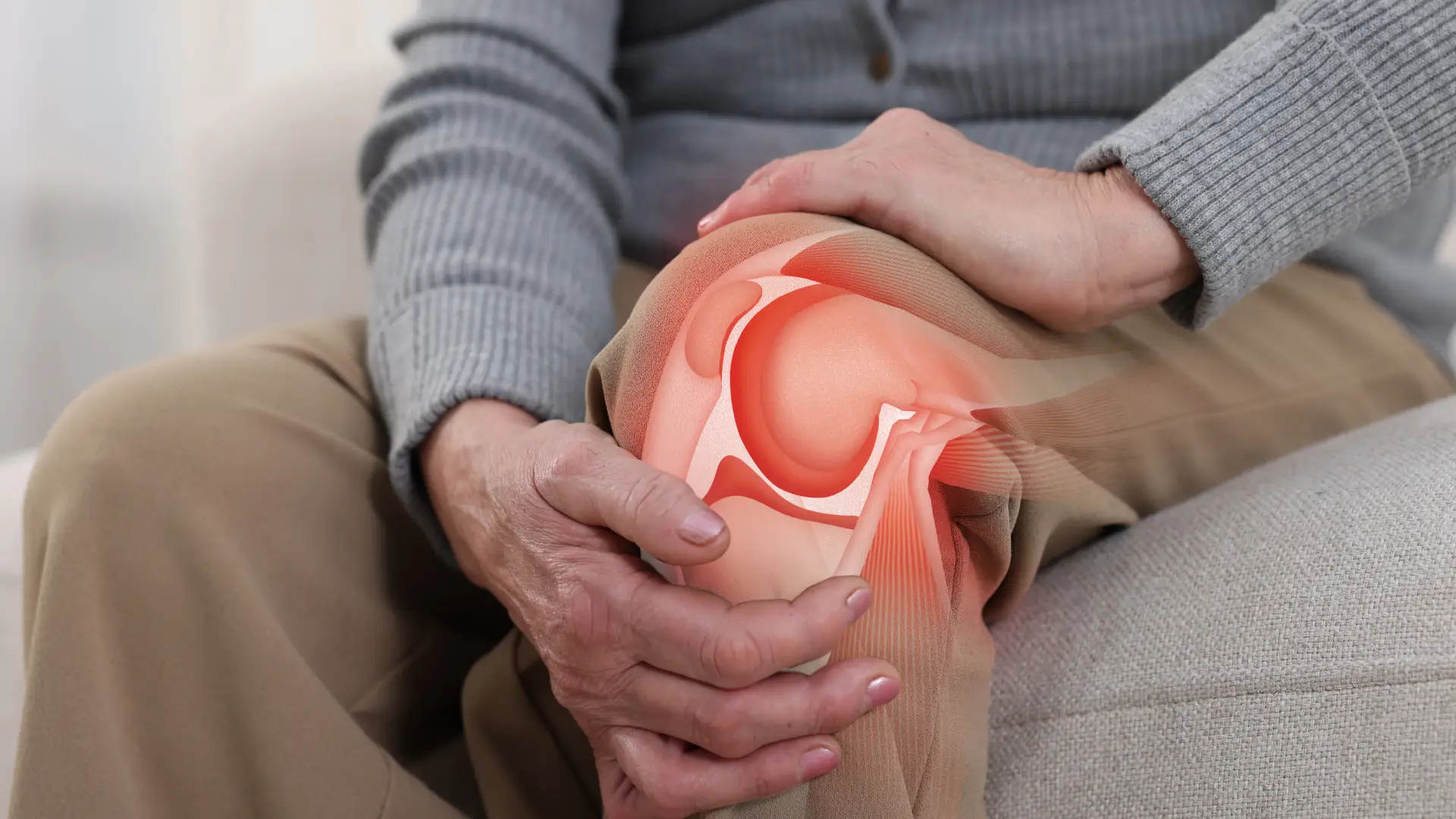
Osteoarthritis develops as the whole joint slowly changes over time. The cartilage at the ends of your bones thins, and the bone underneath, the joint lining and nearby tissues all react. Pain and inflammation can start early in this process, well before any bone touches bone. In more advanced cases, enough cartilage is lost that the bones can begin to rub together.
Rheumatoid arthritis works in a different way. It is not driven by wear, injury or age. Instead, the immune system attacks the synovium, the lining of the joint that makes lubricating fluid. This sets off inflammation that can hit several joints at once, and sometimes other parts of the body too.
Rheumatoid arthritis is far less common than osteoarthritis. The treatment differs as well. Care for osteoarthritis usually focuses on the single joint causing trouble. Rheumatoid arthritis needs medication that works throughout the whole body to calm the immune process and reduce inflammation.
Other types of arthritis worth knowing
The arthritis family goes well beyond these two. A few other types of arthritis are common, and each has its own cause, pattern and treatment.
Gout happens when uric acid crystals build up inside a joint, often the big toe or ankle. It tends to flare suddenly, with severe pain, swelling and redness.
Psoriatic arthritis is linked to the skin condition psoriasis. It can inflame the joints as well as the skin, though the timing and severity of each vary from person to person.
Ankylosing spondylitis is an inflammatory condition that mainly affects the spine. Over time, the inflammation can lead to stiffness and, in some cases, the spine bones fusing together.
So when someone asks what arthritis is, the type they mean really matters. Arthritis is not one single disease, and knowing the exact diagnosis is the first step towards the right treatment.
What osteoarthritis does inside the joint
Osteoarthritis is often called a degenerative joint disease. That label is true, but it does not really explain what is going on inside the joint.
A healthy joint is a cleverly built structure. The ends of the bones are capped with smooth cartilage, so they glide over each other and soak up everyday forces. A capsule lined with the synovium surrounds the joint and makes lubricating fluid. Ligaments hold things steady, and the muscles around the joint control movement and keep it stable.
In osteoarthritis, this system slowly breaks down. The changes do not happen overnight. They build up over many years, and they tend to follow a fairly set pattern through four broad stages.
The four stages of osteoarthritis
Doctors often grade osteoarthritis on X-ray using the Kellgren and Lawrence (KL) scale. It runs from grade 1 to grade 4, based on how much change shows up in the joint.
- KL grade 1 (doubtful). Small bony spurs, called osteophytes, may start to form around the edge of the joint. The gap between the bones usually looks normal, and the changes can be hard to spot.
- KL grade 2 (mild). Osteophytes are now clear to see. The joint space may start to narrow, which points to some early cartilage loss.
- KL grade 3 (moderate). The joint space narrows more, showing greater cartilage loss. The bone under the cartilage may thicken, and larger osteophytes often appear.
- KL grade 4 (severe). There is marked narrowing, lots of osteophytes, and more advanced bony changes. In places, the bones may sit very close together because so much cartilage has gone.
One point catches many people out. The X-ray picture and the symptoms do not always match. Some people with severe changes on a scan feel little pain. Others with only mild or moderate changes struggle a great deal. That is why doctors treat the person, not the scan. Imaging helps explain what is happening inside the joint, but it does not tell the whole story of daily life.
Causes of osteoarthritis
No single thing causes osteoarthritis. Most people develop it through a mix of factors rather than one clear trigger. Some of those factors you can change. Others you cannot. The main causes of osteoarthritis fall into a few groups.
Age and joint ageing
As we get older, the tissues inside our joints change. Over time, the cartilage copes less well with daily stress. So osteoarthritis becomes more common with age. It rises sharply after about 45, and by 70, many people show some signs of it on a scan, even if they have no symptoms at all.
Body weight and joint loading
Body weight is one of the biggest risk factors you can change, especially for the knees. Every step sends a force through the knee several times your body weight. So even a small weight gain adds a lot of load over a day.
The link is not only mechanical. Fat tissue is active in the body and releases substances that can drive inflammation. That may be why extra weight raises the risk, and why even modest weight loss can ease symptoms.
Joint injury and previous trauma
A past joint injury can raise the risk of osteoarthritis later in life. Common examples include anterior cruciate ligament (ACL) tears, meniscus injuries, and fractures that run into or near a joint.
Not everyone with these injuries goes on to develop osteoarthritis. But an injury can change how forces spread across a joint when you move. Over time, that can load certain parts of the cartilage more than others. In fact, post-traumatic osteoarthritis accounts for around 12% of all osteoarthritis cases.
Genetics and joint shape
Your genes can shape your risk, too. Osteoarthritis often runs in families, and researchers have found genes that affect cartilage, inflammation and the shape of our joints.
The way a joint is formed also plays a part. Hip dysplasia, where the socket does not fully cover the ball of the hip, raises the risk of hip osteoarthritis later on. Certain knee shapes can do the same by loading one part of the joint more than another. Still, having these factors does not make osteoarthritis a certainty. Many people with them never get serious symptoms.
Occupation and repetitive joint use
Some jobs carry a higher risk, especially those with years of heavy physical work. Roles that involve a lot of kneeling, squatting, lifting or carrying have been tied to more knee and hip osteoarthritis. Construction workers, floor layers and farmers come up often.
Heavy, repeated use of the hands may add to osteoarthritis in the fingers and thumb, especially alongside age and family history. Normal daily use of a joint is not thought to cause it, though. Staying active stays an important part of keeping joints healthy.
Sex and hormonal factors
Women are more likely to develop osteoarthritis than men, especially after 50. The gap is clearest in the hands, where women are twice as likely as men to develop hand osteoarthritis.
Researchers think hormones may matter here. Osteoarthritis often picks up around the menopause, which hints that oestrogen may protect joint tissue. The full picture is complex, though. Joint shape, genetics, muscle strength and loading patterns may all play a part. Being female is certainly a risk factor, but it is only one of many.
Where osteoarthritis most commonly develops
Osteoarthritis tends to favour weight-bearing joints and those that take repeated stress over a lifetime. The knee is the most commonly affected joint overall, with the hip next in line.
After that come the small joints of the hand and fingers. The base of the thumb, known as the carpometacarpal or CMC joint, is another common spot, along with the foot and ankle, elbow and shoulder. The spine can be affected too, though it tends to behave differently from joints in the arms and legs.
Symptoms vary by joint. Knee osteoarthritis often starts with pain along the inner side of the knee, plus a stiff feeling after sitting in the car or at a desk. Hip osteoarthritis tends to cause groin pain and a clear loss of rotation when you turn the leg inward. Thumb base osteoarthritis brings sharp pain when you pinch or grip. Foot osteoarthritis, often around the big toe joint in a condition called hallux rigidus, makes walking gradually more uncomfortable.
Joint Pain Practice offers non-surgical treatment for osteoarthritis across a range of joints. That includes the knee, hip, hand and wrist, thumb base, foot and ankle, and the elbow and shoulder. You can also view all the conditions we treat in one place. This means you can get advice aimed at the joint causing you the most trouble.
Speak to a specialist about your osteoarthritis
Symptoms of osteoarthritis
In the early stages, osteoarthritis is often quite subtle. Symptoms tend to creep up on you rather than arrive all at once. Many people only realise later that the problem has been building up for months or even years.
There is no single sign that defines osteoarthritis. It is usually a set of symptoms that slowly grows and sticks around. A typical example is a 58-year-old who has ignored a creaky knee for a couple of years. Bit by bit, they notice stiffness first thing in the morning, soreness after a long walk, and a grinding and painful feeling when going up or down the stairs.
The most common symptoms of osteoarthritis include the following:
- Joint pain. Early on, pain often comes with activity and eases with rest. As things progress, it can last longer and may be there at rest or at night.
- Morning stiffness. Many people feel stiff when they first get up or after sitting for a while. It usually loosens once the joint gets moving. Stiffness that drags on for more than about 30 minutes points more to an inflammatory arthritis like rheumatoid arthritis.
- Crepitus. This is the grating or grinding feeling some people notice when a joint moves.
- Swelling. The joint may look bigger. Sometimes that is because of bony growth around the edges, and sometimes it is irritation and fluid buildup inside the joint lining.
- Reduced movement. This shows up differently across joints. Hip osteoarthritis can make it harder to turn the leg inwards or backwards, while knee osteoarthritis can make it difficult to fully straighten or deeply bend the knee.
- Muscle weakness. A painful joint gets used less. Over time, the muscles around it can weaken, which affects how steady and strong it feels.
There can be a lot of change in symptoms and people can have good days and bad days for no obvious reason. That variation is part of why it can take time to judge whether a treatment is really helping.
How osteoarthritis is diagnosed
In most cases, doctors can diagnose osteoarthritis from your history, a physical examination and, where useful, a plain X-ray. Extra tests come in only when the picture is unclear or another condition is being considered.
Clinical assessment
The visit usually starts with a chat about your symptoms. A doctor will want to know when the pain began, which activities make it worse, whether there has been an injury, and how things have changed over time.
Next comes the examination. The doctor checks the joint’s range of movement, looks for swelling or bony growth, and feels for tender spots. They may also test muscle strength and watch how the joint works during everyday movements.
X-rays
A plain X-ray is the imaging test used most often for osteoarthritis. It is not always needed if the diagnosis is already clear, but it can confirm things and show how far the changes have gone.
Typical findings include a narrower joint space, which reflects cartilage loss, plus extra bits of bone called osteophytes around the joint edges. Some scans also show denser bone under the joint surface, called subchondral sclerosis, and small cyst-like spots in the bone.
MRI
Most people with osteoarthritis do not need an MRI scan. Doctors tend to use it when the diagnosis is unclear, or when there is a worry about other structures such as the meniscus, ligaments or tendons.
An MRI can pick up cartilage changes earlier than an X-ray. Spotting those early changes generally doesn’t change the treatment though.
Blood tests
Blood tests do not diagnose osteoarthritis. They are useful when a doctor is weighing up other causes of joint pain, such as rheumatoid arthritis, gout or infection. In those cases, the results can flag inflammation or other signs you would not expect in osteoarthritis.
Osteoarthritis treatment options
Osteoarthritis cannot be cured. Even so, there are treatments that can help with the pain, improve how the joint works, and help you stay active.
Treatment usually starts with the gentlest options. That often means exercise, physiotherapy and, for weight-bearing joints, trying to lose weight. Medicines such as anti-inflammatory gels and tablets can help with symptom control too.
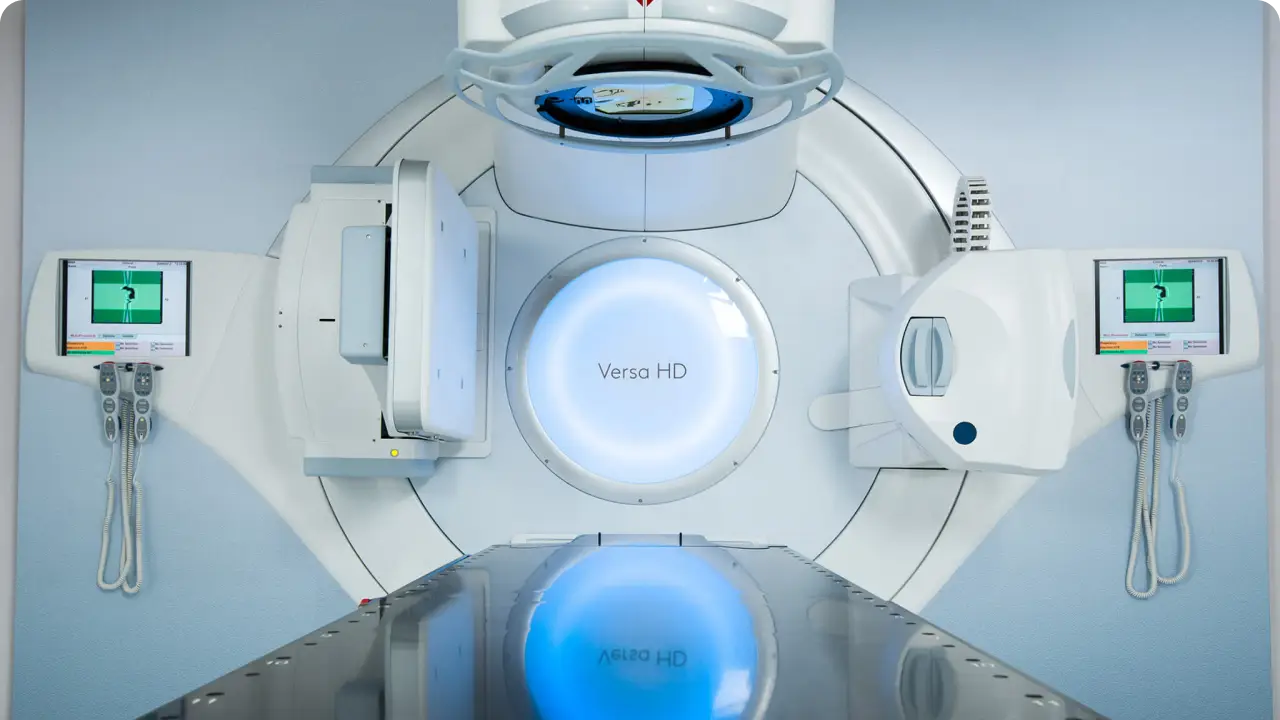
If symptoms stay troublesome after a few months of doing those things, other options can be considered. These can include joint injections, low-dose radiotherapy, or a mix of approaches. Low-dose radiotherapy is usually considered after conservative care has been tried for around three to six months, and before surgery becomes necessary. It can be used either before or after injections. If you want to know who gets the most benefit from radiotherapy, that is worth reading next.
Joint replacement surgery is usually reserved for more advanced disease, where symptoms still affect quality of life despite non-surgical care.
For a fuller look at each option, where it sits in the pathway, and what results are realistic, see our full guide to osteoarthritis treatment options.
Living with osteoarthritis day to day
Osteoarthritis is a long-term condition, but for most people, it does not follow a straight downhill path. Many people have times where symptoms hold steady, broken up by the odd flare before things calm again. How fast it progresses varies hugely, and a scan alone cannot predict it.
A few things tend to contribute towards how people do over time:
- Staying active helps. It is natural to want to rest a sore joint, but stopping movement often backfires. Muscles weaken, joints stiffen, and daily tasks get harder. People who keep moving within their limits usually do better.
- Symptoms do not always match the damage. Some people have severe changes on a scan, yet little pain. Others hurt a lot with only mild findings. Again, doctors treat the person, not the picture.
- General health counts. Good sleep, regular movement, a healthy weight, and support for stress or low mood all affect how osteoarthritis feels. Pain and mood feed into each other, so caring for both matters.
- Flares are normal. Most people get periods when symptoms flare up. These often settle with a short rest, simple pain relief, and a steady return to movement over days or weeks.
If symptoms suddenly get much worse, or a joint turns very swollen, red or hot, or you feel feverish and unwell, get medical advice promptly. That can point to something other than osteoarthritis, for instance, an infection.
A practical note for people in the UK. There are often log waits for access to specialist musculoskeletal services and joint replacement surgery. This varies by area, but waits of many months for an orthopaedic assessment or surgery are common.
Because of this, many people start looking at their options well before they need surgery. This does not mean putting off an operation that is truly needed. But it does mean that there may be room to improve pain and movement with non-surgical care meanwhile.
The message is simple: osteoarthritis is not just a choice between living with the pain and having a joint replacement. Between those two ends of the spectrum are a range of treatment options, including exercise, weight management, medicines, injections and, for the right patients, low-dose radiotherapy. Understanding how osteoarthritis develops and where each treatment fits can help you make informed decisions, reduce pain, and stay active and independent for longer.
What is arthritis: your questions answered
What is arthritis, and where does osteoarthritis fit in?
Arthritis is an umbrella term for more than 100 joint conditions. Osteoarthritis is the most common type. It develops as the structures in a joint change over time, including thinning cartilage and changes in the bone underneath. Rheumatoid arthritis is different, caused by the immune system attacking the joints. The causes differ, so the treatments differ too.
What is arthritis like in the early stages?
Early on, the signs are often subtle. People may notice stiffness after sitting, mild soreness during or after activity, or an odd click or grating feeling from a joint. Symptoms usually build slowly rather than appear overnight, which is why many people live with them for months before seeking help.
At what age does osteoarthritis usually start?
Osteoarthritis becomes more common from around age 45, with rates increasing steadily as people get older. It can also start earlier, especially after a major joint injury or with inherited risk factors.
Can osteoarthritis be cured?
There is currently no treatment that cures osteoarthritis or fully restores a worn joint. However, many people can manage it successfully and achieve meaningful improvements in pain, movement and day-to-day function. The aim of treatment is to reduce symptoms, maintain mobility and help you continue doing the activities that matter to you.
Which joints does osteoarthritis affect most?
The knees and hips are among the most commonly affected joints. Osteoarthritis also often affects the hands and fingers, the base of the thumb, the feet and the spine. Although it can develop in almost any joint, it is more common in joints that experience high levels of wear and stress over time.
What treatments help if exercise and medication are not enough?
If symptoms stay troublesome, other options may suit you. These include corticosteroid injections, hyaluronic acid injections, low-dose radiotherapy, and in some cases, joint replacement surgery. The right choice depends on the joint, the severity, your general health and activity, and how you feel about more invasive procedures.
A consultation with Dr Shaffer is the most direct way to find the right next step for your joint and your situation. To explore whether radiotherapy could ease your osteoarthritis pain, you can book a consultation today.