
At a Glance
Here are the main points to remember about the stages of knee osteoarthritis.
- The four stages of knee osteoarthritis describe changes visible on an X-ray, from mild to severe.
- The amount of pain you experience does not always match the changes seen on your X-ray.
- Osteoarthritis usually develops gradually, but there is no fixed timeline for how quickly it progresses.
- Exercise and weight management, where appropriate, can help manage symptoms at every stage.
- Several treatments are available for persistent knee pain, including low-dose radiotherapy for some patients. Knee replacement surgery may be considered when there is advanced osteoarthritis on X-ray, together with severe pain and significant difficulty with everyday activities.
The stages of knee osteoarthritis describe the changes that can be seen on an X-ray. They help doctors assess how much the joint has been affected, but they do not necessarily reflect how much pain you experience or how quickly the condition will progress.
If you’ve been told that you have a particular stage of knee osteoarthritis, it’s natural to wonder how serious it is and what it means for your future.
This guide explains the four stages of knee osteoarthritis, how they are diagnosed and what treatment options may be appropriate at each stage. You can also read more about knee osteoarthritis and its symptoms and treatments.
How Are the Stages of Knee Osteoarthritis Measured?
Doctors commonly use a system called the Kellgren-Lawrence grading scale to assess the severity of knee osteoarthritis on an X-ray.
This system looks at several changes within the knee joint:
- Bone spurs (osteophytes): Small bony growths that develop around the edges of the joint.
- Joint space narrowing: A reduction in the space between the bones of the knee, which can indicate loss of cartilage.
- Changes in the bone: The bone beneath the cartilage may become denser (known as sclerosis), and small cysts can sometimes develop. In more advanced cases, the shape of the bones may also change.
Cartilage itself cannot be seen clearly on an X-ray, so doctors use the space between the bones to help assess cartilage loss. X-rays are often taken while standing, as this can make joint space narrowing easier to identify.
The Kellgren-Lawrence scale runs from grade 0 (no signs of osteoarthritis) to grade 4 (severe osteoarthritis). Grades 1 to 4 are commonly described as the four stages of knee osteoarthritis.
Importantly, the stage of osteoarthritis does not always match the severity of your symptoms. Some people with advanced changes on X-ray have relatively little pain, while others with mild changes experience considerable discomfort.
Osteoarthritis also progresses at different rates. Some people remain at the same stage for many years, while others experience more noticeable changes over time.
Treatment decisions should therefore take account of your pain, mobility and how much the condition affects your everyday life, as well as the X-ray findings.
The Four Stages of Knee Osteoarthritis
The four stages describe how much osteoarthritis is visible on an X-ray, from very early changes through to severe joint damage.
Although more advanced osteoarthritis is generally associated with more severe symptoms, the relationship is far from straightforward. Some people with relatively mild changes on X-ray experience considerable pain, while others with advanced osteoarthritis have few symptoms.
Stage 1: Very Early Changes (Doubtful Osteoarthritis)
What the X-ray shows: There may be a very small bone spur at the edge of the joint, but the space between the bones is usually normal. At this stage, the changes are too subtle to confirm osteoarthritis with certainty.
These early changes often go unnoticed. You can read more about the early signs of knee osteoarthritis.
Stage 2: Mild Osteoarthritis
What the X-ray shows: Definite bone spurs are visible, and there may be some narrowing of the space between the bones. However, the overall structure of the joint is relatively well preserved.
Stage 3: Moderate Osteoarthritis
What the X-ray shows: There is more obvious narrowing of the joint space, along with multiple bone spurs. The bone beneath the cartilage may also become denser, a change known as sclerosis.
Stage 4: Severe Osteoarthritis
What the X-ray shows: There is marked narrowing of the joint space, sometimes to the point where the bones appear to be touching. Large bone spurs and significant changes in the underlying bone may also be present.
Stage 4 osteoarthritis is sometimes described as “bone-on-bone”, because the space between the bones has become severely narrowed. However, this term can be misleading. Even when X-rays show advanced osteoarthritis, the amount of pain and difficulty people experience varies considerably. Severe changes on an X-ray do not necessarily mean that knee replacement surgery is needed.
How Do Symptoms Relate to the Stages of Knee Osteoarthritis?
The stage of osteoarthritis shown on an X-ray does not necessarily predict how much pain you will experience.
Common symptoms of knee osteoarthritis include:
- Pain during activities such as walking, climbing stairs or standing for long periods.
- Stiffness, particularly after sitting or resting.
- Swelling around the knee, which may come and go.
- Grinding or clicking sensations when moving the joint.
- Difficulty fully bending or straightening the knee.
These symptoms can occur at any stage of osteoarthritis. They may also vary from day to day, with periods when the knee feels relatively comfortable and others when symptoms become worse.
People with more advanced osteoarthritis are generally more likely to experience persistent pain, reduced mobility and greater difficulty with everyday activities. In some cases, pain may occur even at rest or during the night.
However, even people with severe changes on X-ray may have relatively mild symptoms.
This is why treatment decisions should take account of both the X-ray findings and how much the condition affects your daily life.
Who Develops Knee Osteoarthritis and What Increases the Risk?
Knee osteoarthritis becomes more common with age, particularly from middle age onwards. Around 5.4 million people in the UK have knee osteoarthritis.
Several factors can increase your risk of developing knee osteoarthritis or experiencing more advanced joint changes:
- Age: The risk increases as we get older.
- Previous knee injuries: Injuries to the anterior cruciate ligament (ACL) or meniscus can increase the likelihood of developing osteoarthritis later in life.
- Excess weight: Carrying additional weight increases the forces passing through the knee joints, particularly when walking or climbing stairs. Excess body fat can also increase levels of inflammatory substances circulating in the body, which may contribute to the development and progression of osteoarthritis.
- Family history: Having close relatives with osteoarthritis may increase your risk.
- Occupation: Jobs involving frequent kneeling, squatting or heavy lifting can increase the risk of knee osteoarthritis.
- Sex: Knee osteoarthritis is more common in women, particularly after menopause.
Osteoarthritis that develops following an injury is called post-traumatic osteoarthritis. It accounts for approximately 12% of symptomatic osteoarthritis cases and can develop years after the original injury, sometimes affecting people at a younger age.
Having one or more risk factors does not necessarily mean you will develop osteoarthritis or progress to a more advanced stage.
How Is Knee Osteoarthritis Diagnosed in the UK?
Knee osteoarthritis can often be diagnosed by your GP based on your symptoms and a physical examination, without the need for an X-ray.
According to NICE guidelines, osteoarthritis can usually be diagnosed without imaging if you:
- Are aged 45 or over.
- Have knee pain related to physical activity.
- Have no morning stiffness, or stiffness that lasts no longer than 30 minutes.
Your GP will also consider your medical history and examine your knee to check for swelling, tenderness and changes in movement.
An X-ray may be recommended if your symptoms are unusual, another condition is suspected or further information about the joint is needed. Imaging may also be useful when considering certain treatments, including surgery.
Although an X-ray is not usually needed to diagnose knee osteoarthritis, it can be important when deciding which treatments are suitable. For example, at Joint Pain Practice, we require an X-ray before considering low-dose radiotherapy. This allows us to assess the stage of osteoarthritis, as we do not normally offer this treatment to patients with grade 4 disease.
Treatment decisions therefore take account of both your symptoms and the changes seen on imaging, particularly when considering more specialised treatments.
Treatment Options Through the Stages of Knee Osteoarthritis
Treatment for knee osteoarthritis depends on your symptoms, how much the condition affects your everyday life and the changes seen on your X-ray.
NICE recommends therapeutic exercise and weight management, where appropriate, as the main treatments for osteoarthritis. These remain important at every stage, including advanced osteoarthritis.
Other treatments, including medication, injections, low-dose radiotherapy and surgery, may be considered depending on your individual circumstances.
Early Stages of Knee Osteoarthritis: Stages 1 and 2
Regular exercise is one of the most effective ways to manage knee osteoarthritis. Strengthening the muscles around your knees and hips can help support the joint, improve mobility and reduce pain.
A physiotherapist can help you develop an exercise programme suited to your symptoms and fitness level.
Some discomfort during exercise is common and does not necessarily mean you are damaging your knee. However, if pain becomes severe or continues to worsen, your exercise programme may need adjusting.
If you are overweight, losing weight can help reduce knee pain through two main effects: reducing the forces passing through the knee and lowering levels of inflammation in the body.
Even modest weight loss can make a difference. Research suggests that losing one pound of body weight can reduce the load on the knee by approximately four pounds with each step.
If pain relief is needed, anti-inflammatory gels, such as ibuprofen or diclofenac, are usually recommended before taking tablets.
Later Stages of Knee Osteoarthritis: Stages 3 and 4
Exercise and weight management remain important, even when X-rays show more advanced osteoarthritis. Maintaining muscle strength and joint movement can help preserve mobility and independence.
If pain continues, additional treatments may be considered:
- Anti-inflammatory medication: Tablets such as ibuprofen or naproxen may help relieve pain. They should generally be used at the lowest effective dose for the shortest possible time, with appropriate precautions against side effects.
- Walking aids: A walking stick can reduce the load on a painful knee and make walking more comfortable.
- Knee supports: Braces may help some people, particularly when the knee is unstable or the load through the joint is uneven.
- Heat or cold packs: These may provide temporary relief from stiffness or pain.
- Corticosteroid injections: An injection into the knee may provide short-term pain relief, typically lasting between two and ten weeks, although the benefit varies between patients.
The NHS provides further information about treatments for osteoarthritis.
NICE does not routinely recommend paracetamol or weak opioids for osteoarthritis because the benefits are limited and there are potential risks. It also advises against hyaluronic acid injections, glucosamine, acupuncture and several forms of electrotherapy.
The choice of treatment depends on your symptoms and medical history, rather than the X-ray stage alone.
Where Low-Dose Radiotherapy Fits
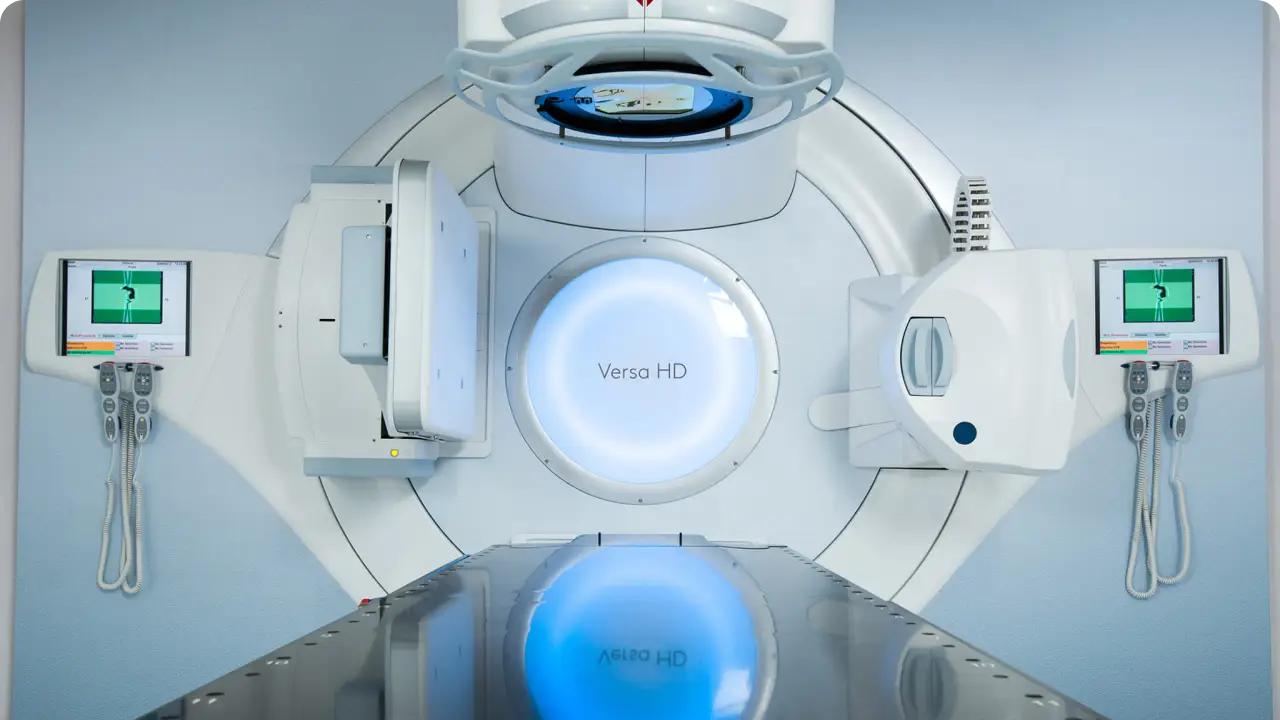
Low-dose radiotherapy (LDRT) is a treatment that uses small doses of radiation to help reduce pain and inflammation associated with osteoarthritis.
It may be considered when knee pain continues despite treatments such as exercise, physiotherapy, weight management and pain medication.
LDRT is generally considered after these treatments have been tried for a reasonable period. It may be offered before or after joint injections, depending on the patient’s circumstances.
The stage of osteoarthritis is important when deciding whether low-dose radiotherapy is suitable. At Joint Pain Practice, we require an X-ray to assess the severity of osteoarthritis before recommending treatment.
LDRT is generally considered for patients with mild to moderate osteoarthritis who continue to experience significant pain despite other treatments. We do not normally offer it to patients with grade 4 osteoarthritis, where there is advanced structural damage to the joint.
The aim of LDRT is to reduce pain and improve mobility. It does not reverse cartilage loss or repair existing joint damage.
What Does the Evidence Show?
Research has reported encouraging results for low-dose radiotherapy in osteoarthritis, although the evidence is still developing.
In a retrospective study involving 970 patients with painful osteoarthritis, average pain scores fell from 66 before treatment to 44 at the first follow-up.
However, because this study did not include an untreated comparison group, it cannot establish how much of the improvement was due to radiotherapy. Results from randomised controlled trials have been largely positive, but more definitive trials are still being done.
Low-dose radiotherapy is not currently included in NICE’s recommended treatments for osteoarthritis and is not routinely available on the NHS.
You can find out more about:
- Low-dose radiotherapy for knee osteoarthritis
- Why radiotherapy is used for osteoarthritis
- Who is most likely to benefit from radiotherapy
If you have persistent knee osteoarthritis pain despite other treatments, you can contact the Joint Pain Practice team to discuss whether low-dose radiotherapy might be appropriate for you.
When Is Knee Replacement Surgery Considered?
Knee replacement surgery may be considered when osteoarthritis has caused advanced damage to the joint and the patient is experiencing substantial pain or difficulty with everyday activities.
For example, someone with severe joint space narrowing on X-ray who struggles to walk, climb stairs or sleep because of knee pain may benefit from a surgical assessment.
However, advanced changes on an X-ray do not automatically mean surgery is necessary. Some people with severe osteoarthritis remain active and have relatively little pain.
Similarly, severe knee pain does not automatically mean that knee replacement is necessary, particularly if X-rays show only mild or moderate joint changes. Other possible causes of pain may need to be investigated.
Surgery is generally considered when:
- X-rays show advanced osteoarthritis.
- Pain, stiffness or reduced mobility significantly affect everyday life.
- Appropriate non-surgical treatments have not provided sufficient relief.
- The patient understands the potential benefits and risks and wishes to consider surgery.
NICE recommends that decisions about referral for joint replacement should be based on clinical assessment and the impact of symptoms, rather than numerical severity scores alone.
Types of Knee Surgery
Depending on the extent and location of joint damage, different operations may be considered:
- Partial knee replacement: Replaces the damaged part of the knee while preserving the remaining joint surfaces.
- Total knee replacement: Replaces the damaged joint surfaces throughout the knee.
- Osteotomy: In selected patients, the bones can be realigned to redistribute weight away from the most damaged part of the knee.
An orthopaedic surgeon can assess whether surgery is appropriate and explain the likely benefits, recovery process and possible risks.
Frequently Asked Questions
How Long Does It Take to Go from Stage 1 to Stage 4?
There is no set timeline. Knee osteoarthritis progresses at different rates, and many people remain at the same stage for years without developing more advanced disease. Factors such as previous knee injuries, excess bodyweight and genetics can influence progression.
Can Knee Osteoarthritis Be Reversed?
The cartilage damage caused by osteoarthritis cannot currently be reversed. However, pain and mobility can improve considerably with exercise, weight management and other treatments. Even people with advanced osteoarthritis can experience meaningful improvements in their symptoms.
Is Stage 4 Osteoarthritis the Same as Bone-on-Bone?
Stage 4 osteoarthritis involves severe narrowing of the space between the bones, sometimes to the point where they appear to be touching on an X-ray. This is often called "bone-on-bone", although the term can be misleading.
The severity of changes on an X-ray does not always reflect how much pain someone experiences. Having stage 4 osteoarthritis does not automatically mean you need knee replacement surgery.
Do I Need an X-ray to Confirm Knee Osteoarthritis?
Not always. According to NICE guidelines, people aged 45 or over with typical symptoms can usually be diagnosed without an X-ray.
However, an X-ray may be needed when considering certain treatments. At Joint Pain Practice, we require an X-ray before assessing suitability for low-dose radiotherapy, as the stage of osteoarthritis helps determine whether treatment is appropriate.
Where Does Low-Dose Radiotherapy Fit?
Low-dose radiotherapy (LDRT) may be considered when knee pain continues despite treatments such as exercise, physiotherapy, weight management and pain medication.
The stage of osteoarthritis is important. At Joint Pain Practice, we generally consider LDRT for patients with mild to moderate osteoarthritis and do not normally offer it to those with stage 4 disease.
LDRT may be considered before or after joint injections, depending on your individual circumstances.
When Is Knee Replacement Surgery Considered?
Knee replacement is generally considered when X-rays show advanced osteoarthritis and pain or reduced mobility significantly affects everyday life despite appropriate non-surgical treatment.
The decision takes account of your symptoms, X-ray findings, overall health and personal preferences. An orthopaedic specialist can discuss whether surgery is likely to help.
If you have knee osteoarthritis and would like to find out whether low-dose radiotherapy could help relieve your pain, contact the Joint Pain Practice team to discuss your suitability for treatment.