
When physio and painkillers stop helping but surgery is not yet needed, see how each alternative to knee replacement compares, low-dose radiotherapy included.
When physio and painkillers stop helping but surgery is not yet needed, see how each alternative to knee replacement compares, low-dose radiotherapy included.

Radiotherapy Specialist
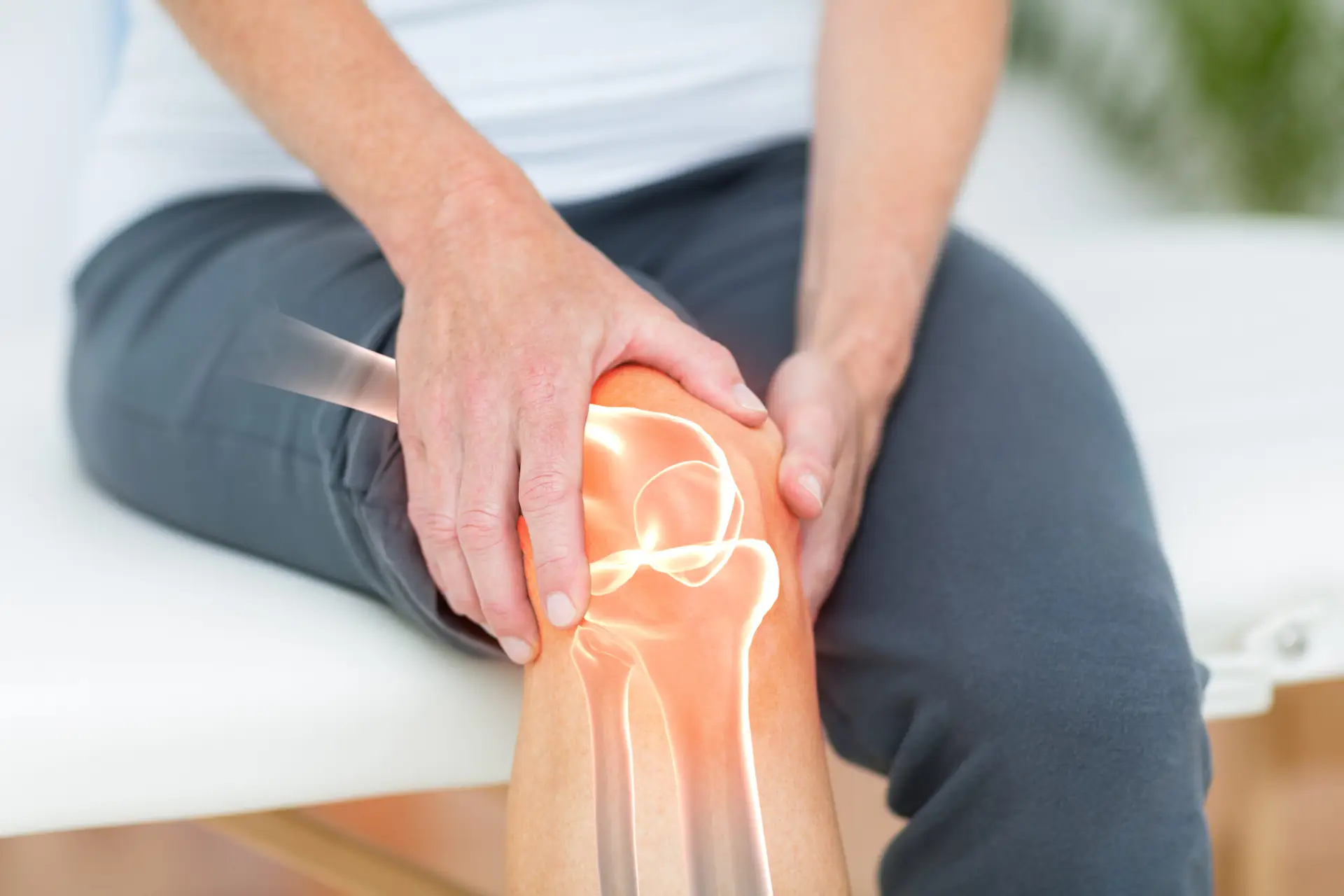
Looking for an alternative to knee replacement usually starts at the same point. You have done the standard things for knee osteoarthritis. You have seen your General Practitioner (GP), tried physiotherapy, worked on exercises, and used pain relief. These steps matter, and for some people they are enough. For many though, the pain keeps affecting walking, stairs, and everyday life. Knee osteoarthritis is common, and around 8.75 million people in the UK have seen a doctor about osteoarthritis. So this in-between stage is one we see often in clinic. The harder problem is rarely the pain on its own. It is not knowing what the next step should be. You are not at the point where surgery is needed, yet the same treatments are no longer giving enough relief.
Most care pathways for knee osteoarthritis focus on two ends of the scale. At one end sit simple treatments such as physiotherapy, exercise, and medication. At the other end is knee replacement surgery, which is mainly used for very advanced disease once other options run out.
What tends to be missing is a clear plan for the large group of people in between. Many spend years in this middle stage. The pain limits daily life, but the joint is not yet at the point where surgery is the only choice. That leaves patients managing symptoms with no clear long-term plan. If you want to understand the condition itself first, our guide to knee osteoarthritis treatment sets out the basics.
At this stage, many people are offered injections. They are presented as a sensible next option, so it helps to know what they actually do and how well they hold up. Three types come up most often.
Steroid injections are the most common. They calm inflammation and ease pain for a short while, but the relief usually fades. Repeated injections may also thin the cartilage and narrow the joint space over time. In fact, they are usually limited to three or four a year because repeated shots can damage the cartilage within a joint. So they are not a strong long-term answer.
Hyaluronic acid injections, often called gel injections, aim to improve how the joint moves. A common brand name is Ostenil. Some people feel better afterwards, especially in earlier disease. Many do not, and the results overall are inconsistent.
PRP, or platelet-rich plasma, is often described as a more advanced or regenerative option. The results are mixed. Some people improve, while others notice little or no change.
Looking at the research as a whole, the message is simple. These injections do not reliably give lasting improvement, and in some studies they perform no better than a placebo, a dummy treatment. That is why many people end up trying one injection after another without a lasting result. There is a practical issue too. Injections tend to be repeated over time, which adds cost, inconvenience, and uncertainty about whether the next one will help.
In practice, many people move through a run of injections with no clear endpoint. There may be some short-term relief, or sometimes none, and even when it helps it often does not last. This can turn into a cycle of trying different options without finding one that gives steady benefit. Injections also mean needles going into the joint. That is routine, but it is still invasive, and not something most people want to keep repeating.
Knee replacement surgery is very effective, but it is mainly used once the joint is severely damaged and other options no longer help. In other words, it is usually a treatment for end-stage osteoarthritis.
Many people in the middle stage are not in that group. The joint may still have some space left, which means there are other things to try before surgery. Exploring less invasive treatments first often makes sense. Surgery is also not a perfect fix. Around one in five patients still report long-term pain after a knee replacement, which is another reason to weigh up every suitable option before taking that step.
Low-dose radiotherapy is built for this gap between early treatment and surgery. It offers a way to treat the pain without injections or an operation, which makes it a genuine alternative to knee replacement for the right patient. It uses very small doses of radiation, far lower than the doses used in cancer treatment.
At these low doses, the treatment calms inflammation inside the joint rather than damaging tissue. As an alternative to knee replacement, it works in a different way to injections. Instead of repeated short-term fixes, it aims for longer-lasting relief without an invasive procedure. You can read more about how low-dose radiotherapy works for osteoarthritis.
Low-dose radiotherapy has been used for many years, with large patient series covering thousands of people. Across these, about 70 to 80 per cent of patients report an improvement in pain.1 More recent randomised trials in knee osteoarthritis have reported better pain and function compared with control treatments.12 Earlier sham-controlled trials were less clear-cut, so the picture is still developing, but the recent results strengthen the case. There is also evidence that radiotherapy may slow how osteoarthritis progresses over time, rather than only easing symptoms.3 That is a real difference from injections, which mostly work in the short term. For a closer look, see what the evidence shows for low-dose radiotherapy in knee osteoarthritis.
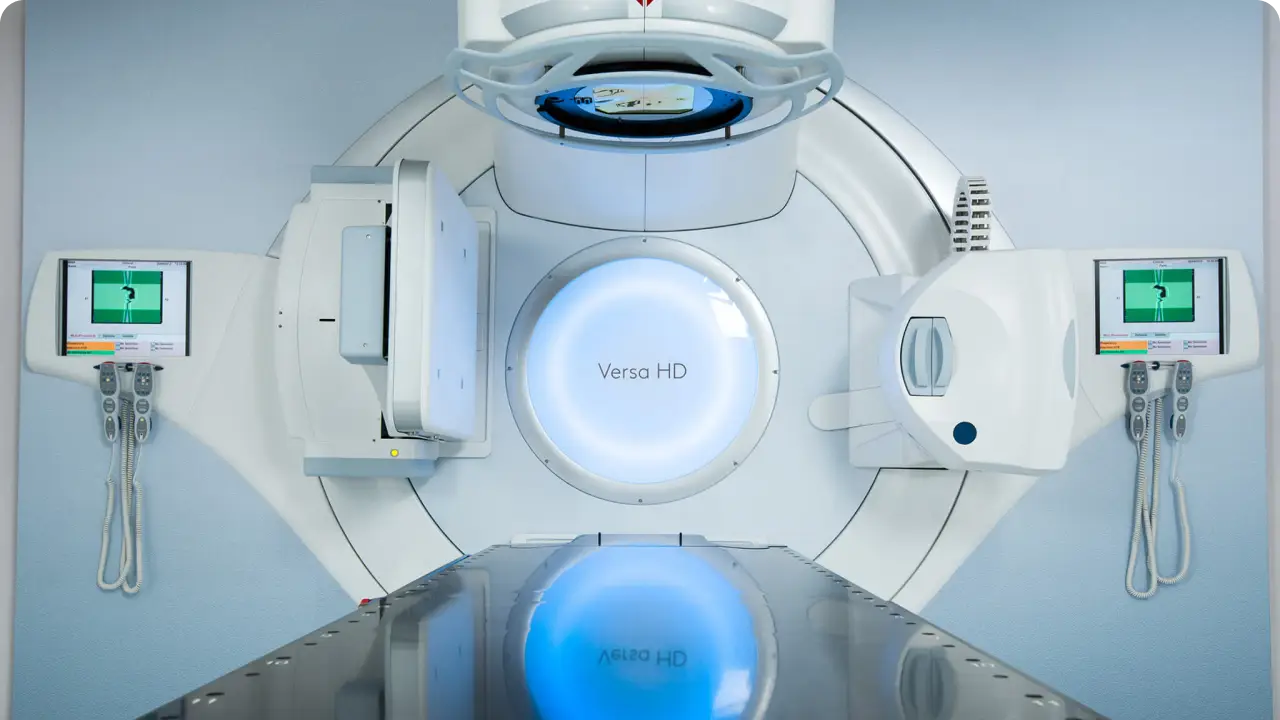
One of the most common questions is what the treatment is like. It is simple. Radiotherapy for osteoarthritis is done as an outpatient. You lie on a treatment couch and a machine moves around you, much like having a scan. Each session takes about ten minutes, and most people feel nothing during it. Reactions such as nausea, tiredness, or dizziness are not expected with these low doses. You can drive yourself home and carry on with your day straight away. A typical course is six sessions over two weeks, usually on a Monday, Wednesday, and Friday.
This treatment tends to work best when there is still some joint space left and the pain continues despite physiotherapy and medication. It is often a good fit if surgery is not yet needed but conservative care is no longer enough. If the joint is completely worn, often described as bone on bone, the chance of benefit is much lower. In that case, surgery is usually the better route. To see whether you might be a good candidate, our guide on who benefits most from radiotherapy for osteoarthritis goes into more detail.
It can help to see the options side by side. The table below compares the main choices on how invasive they are, the benefit you might expect, the strength of the evidence, and the practical catches.
| Treatment | Invasive | Expected benefit | Evidence strength | Practical issues |
|---|---|---|---|---|
| Steroid injections | Yes | Short-term relief | Limited long-term | Repeat use; may worsen joint over time |
| Hyaluronic acid (Ostenil) | Yes | Variable | Inconsistent | Many do not respond |
| PRP (platelet-rich plasma) | Yes | Variable | Mixed | Unpredictable; often costly |
| Low-dose radiotherapy | No | Often longer-lasting | Strong and improving | Simple outpatient treatment |
| Knee replacement surgery | Yes | Long-term for severe cases | Strong | Major surgery; recovery; around one in five have lasting symptoms |
If your knee still hurts after physiotherapy and medication, and surgery is not needed yet, you have several options. The challenge is seeing how they compare, so you can decide what suits you. A clear picture of the benefits, limits, and risks of each one helps you make a more informed choice about what to do next. That matters in osteoarthritis, where decisions are usually made over time rather than all at once.
A good next step is a proper assessment. This means reviewing your symptoms, examining the knee, and looking at imaging such as X-rays or an MRI scan. If you would like to find out whether low-dose radiotherapy could help in your case, you can arrange a consultation to talk it through.
A few questions come up again and again in clinic. Here are short answers to the most common ones.
There is no single best option for everyone. If injections have stopped helping and surgery is not yet needed, low-dose radiotherapy is one non-surgical option worth discussing. The right choice depends on your joint, your symptoms, and your scans.
It may help. Low-dose radiotherapy aims to ease pain and could slow how the joint changes over time. For some people that means putting surgery off, though it cannot be promised for any one person.
The doses used are far lower than those for cancer treatment. Reactions such as nausea or tiredness are not expected, and the treatment is given as a simple outpatient session. Your suitability is checked first.
A typical course is six short sessions over about two weeks, usually on a Monday, Wednesday, and Friday. Each one lasts roughly ten minutes.
If the joint is completely worn, often called bone on bone, the chance of benefit is low. In that situation, knee replacement surgery is usually the better option.
You will talk through your symptoms and history, have your knee examined, and review imaging such as X-rays or an MRI. From there you can discuss whether low-dose radiotherapy fits your situation. You can book a consultation when you are ready.


Don’t let joint pain hold you back from the activities you love any longer. Book a consultation with Dr. Richard today to receive a personalized assessment and start your journey toward a more active life.
We’re thrilled to share some groundbreaking news for those seeking innovative solutions to chronic pain! Our practice will be offering a unique treatment: low-dose radiotherapy …

Please click on the video below to view a replay of our live video from Dr Richard Shaffer about how Low-Dose Radiotherapy can be used …

Radiotherapy is an effective, low-dose treatment for osteoarthritis pain, helping around 75% of patients who have not found relief with exercise, weight loss, or medications. …

