
If you live across the West Midlands, you can now get treatment for osteoarthritis closer to home at The Joint Pain Practice in Birmingham. We bring consultant-led low-dose radiotherapy to the Spire Little Aston site in Sutton Coldfield, so you can access proven, non-surgical pain relief without travelling to London. Every patient is seen by Dr Richard Shaffer, a UK-leading specialist in this treatment, and care is gentle, safe, and built around getting you moving more comfortably again.
By Dr Richard Shaffer
No surgery, no general anaesthetic
Low-dose therapy
Treatment delivered in Birmingham
For many patients in Birmingham, osteoarthritis care has meant choosing between repeated steroid injections that wear off and actually make the situation worse, or waiting for joint replacement surgery. Low-dose radiotherapy sits between those two approaches. It calms the inflammation and pain without needing an invasive joint operation, and the full course can be delivered locally in a matter of weeks. Three things make this approach different:
Proven low-dose radiotherapy that calms joint inflammation at its source, rather than just covering up the pain. With over 10 million people in the UK living with arthritis, more patients are looking for options that sit between injections and surgery.
Dr Shaffer has treated thousands of osteoarthritis patients, helped shape how this therapy is delivered nationally, and serves as President of the International Organisation for Radiotherapy for Benign Conditions.
Dr Shaffer offers the initial face-to-face consultations at four of our centres: London Cromwell Hospital, Wimbledon Cancer Centre, Guildford, and Nottingham. After your consultation, you can choose to undergo the radiotherapy treatment at our Birmingham centre or any of our 15 locations across the UK.
Low-dose radiotherapy is a well-established osteoarthritis treatment used across Europe for benign inflammatory conditions, with decades of clinical use in Germany. The dose is a tiny fraction of cancer radiotherapy, enough to calm the overactive immune cells driving joint inflammation, but far too low to damage the surrounding tissue.
A typical course is six short sessions spread over two to three weeks. There is no anaesthetic, no injection into the joint, and no recovery time. Most patients drive themselves home afterwards and carry on with their day. Pain relief builds gradually rather than instantly, and most patients notice meaningful reductions in pain and stiffness within two to three months.
The evidence base is solid. A pooled analysis of 65 studies covering more than 7,000 patients reported long-term overall response rates of 75% for low-dose radiotherapy in painful osteoarthritis. For Birmingham patients who have already tried physiotherapy or steroid injections without lasting relief, this is a treatment worth looking into.
The first appointment is a proper sit-down review. Dr Shaffer will go through your symptoms, look at any scans or imaging, and examine the affected joint. From there, he'll talk you through whether low-dose radiotherapy is likely to help in your case, and if so, how the course would be planned. Most first consultations at our Birmingham centre last around 30 minutes, and you and your GP will be sent a clear written summary letter within a week after the appointment.
A standard course is six sessions spread over two to three weeks. Each session takes only a few minutes of actual treatment time, and most patients are in and out of the building within around 30 minutes, including check-in. There's no recovery period afterwards, so you can drive home and carry on with your day.
This is the situation most of our Birmingham patients arrive in. Many have already tried physiotherapy, anti-inflammatory medication, or steroid injections without lasting relief. Low-dose radiotherapy is often most useful at exactly that point, although you don’t need to have tried injections to benefit from low-dose radiotherapy.
A GP referral isn't required to book a consultation if you are self-funding, although often one is required in order to be covered by private medical insurance for the initial appointment. Most of our Birmingham patients self-refer directly through our enquiry or booking form, then send through their previous notes and scan reports once the appointment is confirmed.
Most patients having low-dose radiotherapy for osteoarthritis are self-funding, as insurance coverage for this treatment is currently uncertain and varies considerably between providers and policies. We're upfront about costs from the outset, with full pricing transparency before any treatment begins. If you do have private health insurance, we'd recommend getting authorisation for the initial consultation, and then once we have a treatment plan, you can discuss coverage for the radiotherapy treatment directly with your insurer.
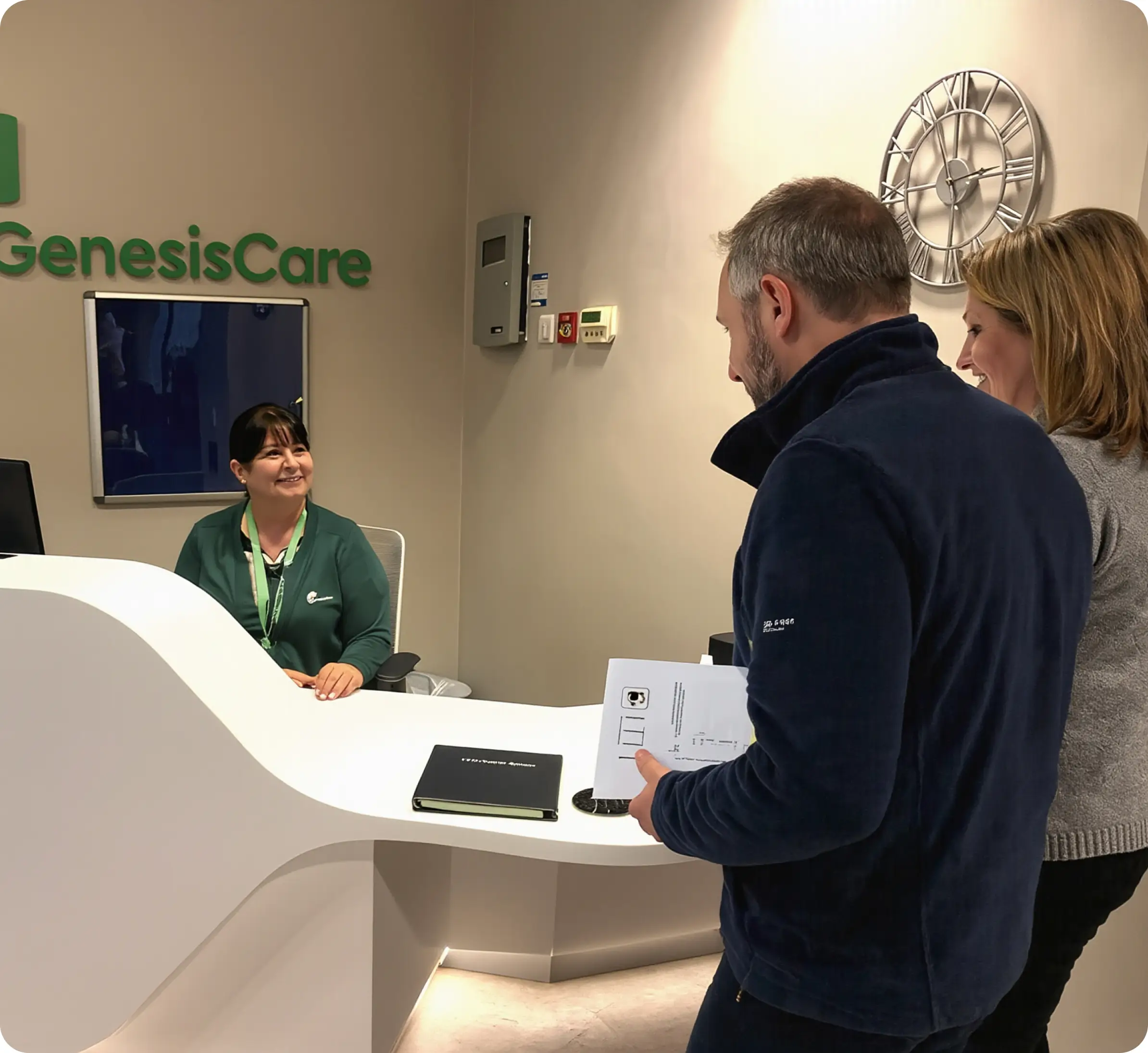
The best way to understand what treatment at our Birmingham centre is actually like is to hear from people who've been through it. Below are a few words from patients who chose low-dose radiotherapy after exhausting other options.

Dr Shaffer explained the treatment clearly so I had no anxiety before and during treatment.
I think this treatment is a great alternative to surgery.

Within 20 minutes of completing an on line enquiry form Dr Shaffer had called me personally, discussed my condition and made an appointment to see him. I never felt under any pressure and completely trusted his expert opinion. At last somebody who took notice and understood the condition. I would highly recommend his care.

The appointment and then the treatment was prompt and straightforward.
Most importantly, it was painless and appears to have worked!

Dr Shaffer was on-time and dealt with the examination of hands/feet. He was able to rely on records of a prior visit in 2011 to help with diagnosis (that I had lost).
He was able to recommend treatment and courses of action - whether through him or colleagues. He was very helpful.

Treatment is delivered at GenesisCare Birmingham, an established private oncology centre based on the Spire Little Aston Hospital site in Sutton Coldfield. The centre is staffed by experienced radiographers and equipped with precise linear accelerators, giving patients the calm, specialist setting this kind of treatment requires.
GenesisCare Birmingham, Little Aston Hall Drive, Little Aston, Sutton Coldfield, B74 3BF
The centre sits just off the A454/A452 corridor in Little Aston. It's roughly 10 miles north of Birmingham city centre and about 3 miles west of Sutton Coldfield. Free on-site parking is available in the hospital grounds.
The nearest stations are Butlers Lane and Blake Street, both on the Cross-City line from Birmingham New Street, roughly 25 - 30 minutes. From either station, it's about a 10-minute taxi ride to the centre.
Local services run along the A454 Aldridge Road. The centre is a short walk from stops near Little Aston Park.
Leave your details below, and our team will be in touch to arrange a consultation at a time that suits you.

