
Osteoarthritis treatment in Wimbledon now includes a route that sits well before the operation theatre. Osteoarthritis is a long-term joint condition that causes pain, stiffness and swelling. Joint Pain Practice runs clinics at the private cancer centre on Parkside in SW19, where Dr Richard Shaffer treats sore, stiff joints with low-dose radiotherapy.
Low-dose radiotherapy uses a very small amount of radiation to settle the inflammation inside a painful joint. There is no cut, no anaesthetic and no night in hospital.
Wimbledon is one of the sites where Dr Shaffer holds face-to-face consultations. That counts for something if you would rather sit down with the specialist than have your case looked at from a distance. You can meet him, have the joint examined and have your treatment in the same building.
Consultations held by Dr Richard Shaffer
No cuts, no general anaesthetic
A small fraction of cancer radiotherapy
Free parking on site
Most people arrive here having already worked through the usual list. Physiotherapy helped for a while. Anti-inflammatories took the edge off. An injection bought a few months. Surgery has been mentioned, but nobody is in a hurry. Low-dose radiotherapy sits in that gap, and three things shape how it works at the Wimbledon centre.
Knee replacement works well, but it asks a lot. The NHS advises waiting at least six weeks before driving again after a total knee replacement. Low-dose radiotherapy asks less. Sessions take minutes and you drive yourself home. Here is more on the alternative to knee replacement.
Dr Shaffer is a Consultant Clinical Oncologist, a hospital doctor who treats disease with radiotherapy. He has treated more than 3,000 patients and is President of the International Organisation for Radiotherapy for Benign Conditions. At Wimbledon he sees you himself. More on how radiotherapy treats osteoarthritis.
The therapy treats knees, hips, hands, wrists and thumbs, feet, ankles, elbows and shoulders. It suits steady, long-standing pain rather than a first flare-up. Most patients have had symptoms for a year or more, and have already tried physiotherapy, weight management or pain relief.
The word radiotherapy puts some people off, so it helps to know what the dose really is. Osteoarthritis treatment in Wimbledon uses a small fraction of the dose given in cancer care. The beam targets the inflammatory activity keeping the joint irritated, not the bone or the cartilage. Centres in Germany and elsewhere in Europe have used it this way for decades. A course runs to six short sessions across about two weeks, on alternate weekdays. Each appointment takes roughly ten minutes. There are no needles and no sedation, so most people carry on with the rest of their day and fit sessions around work.
Relief builds slowly rather than arriving overnight. One study followed 970 patients whose average pain score fell from 66 to 44 out of 100 by their first follow-up appointment. In the same study, about 2 in 3 treated joints were rated as less painful or pain-free at that point. We review patients at three months here, because that is usually when the picture becomes clear. Results do vary from person to person. Dr Shaffer will be straight with you about what is realistic for your joint.
None of this is a rare problem. One in six people in the UK, more than 10 million adults, young people and children, live with arthritis. Osteoarthritis is much the most common form, and the knee is the joint that brings most people through the door.
Yes. Parkside does both, so most people have their consultation and their six sessions in the same place. If somewhere else is easier, we can deliver the treatment at whichever of our 15 UK centres suits you better. The plan travels with you.
The beam is shaped to the affected joint, and the dose is a small fraction of what is used in cancer treatment. Side effects are uncommon and usually mild. A small number of people notice a short-lived increase in pain in the first week or two before things settle. Dr Shaffer will talk through the risks properly at your consultation. That includes how they apply at your age and for your particular joint.
It can, and that is not unusual with a long-term joint condition. A second course is possible for some patients and is used in European practice. Whether it suits you depends on the joint, the gap since your first course and your wider history. Worth raising at your three-month review rather than sitting on it.
Often, yes. Many people have symptoms in more than one place, such as both knees or several finger joints. Treating more than one site within a single course is common and does not usually add much to the number of visits. Dr Shaffer will confirm what is appropriate once he has examined you
Consultation slots on Parkside usually come up within a couple of weeks, with treatment following a few weeks after that, subject to availability. You can send an enquiry or call the practice directly. If you have had X-rays or an MRI scan, sending the report over in advance saves time at the first appointment.
The best way to understand what treatment at our Birmingham centre is actually like is to hear from people who've been through it. Below are a few words from patients who chose low-dose radiotherapy after exhausting other options.

Dr Shaffer explained the treatment clearly so I had no anxiety before and during treatment.
I think this treatment is a great alternative to surgery.

Within 20 minutes of completing an on line enquiry form Dr Shaffer had called me personally, discussed my condition and made an appointment to see him. I never felt under any pressure and completely trusted his expert opinion. At last somebody who took notice and understood the condition. I would highly recommend his care.

The appointment and then the treatment was prompt and straightforward.
Most importantly, it was painless and appears to have worked!

Dr Shaffer was on-time and dealt with the examination of hands/feet. He was able to rely on records of a prior visit in 2011 to help with diagnosis (that I had lost).
He was able to recommend treatment and courses of action - whether through him or colleagues. He was very helpful.

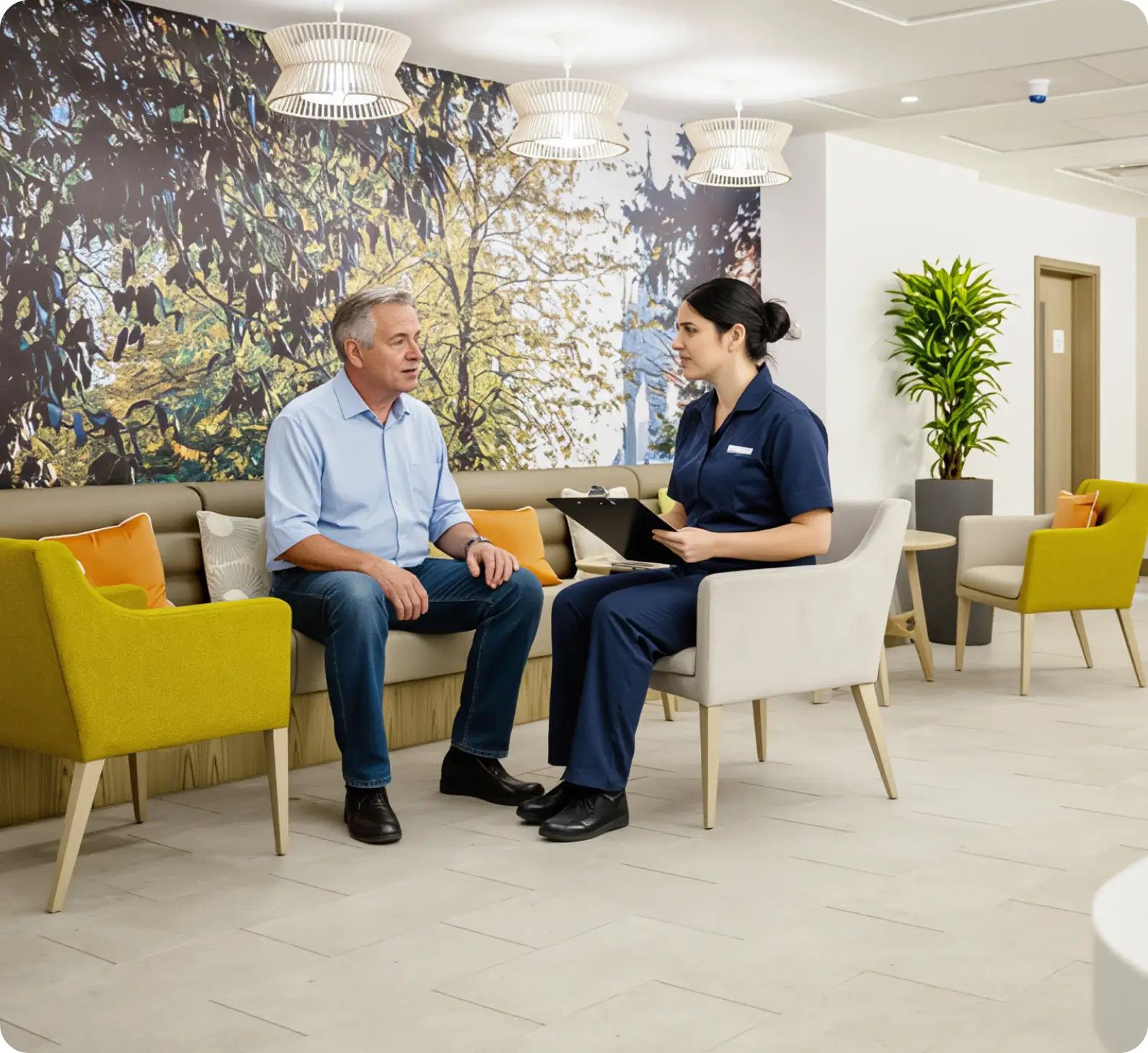
We give the treatment at the private cancer centre at 49 Parkside, on the eastern edge of Wimbledon Common. It is a purpose-built radiotherapy facility working alongside Nuffield Health Parkside Hospital, staffed by specialist radiographers.It is a calm building rather than a busy general hospital. Most patients notice that straight away, and several have told us it made the first visit easier than they expected.
49 Parkside, Wimbledon, London SW19 5NB. Open Monday to Friday, 09.00 to 17.00
The centre is a short drive from the A3. You can reach it from the M25 without going through central London, and Putney Bridge and Wandsworth Bridge are the nearest crossings from the north. Parking on site is free. Reception will ask you to register your number plate when you arrive.
Wimbledon station is a short taxi ride away. It is served by the District line, South Western Railway and the tram from Croydon. East Putney and Southfields also sit on the District line, and Putney mainline station is another option from Waterloo.
Route 93 runs between Putney Bridge and North Cheam and passes the centre. The nearest stop is Calonne Road. The same route calls at Wimbledon station, which makes it a straightforward connection from the tram or the train.
Living with a painful joint for months on end wears people down. Most people who contact us have been putting up with it for far longer than they needed to. Leave your details, and someone will be in touch to arrange a consultation on Parkside.
If you would rather talk it through before booking osteoarthritis treatment in Wimbledon, say so on the form and we will call you.

